
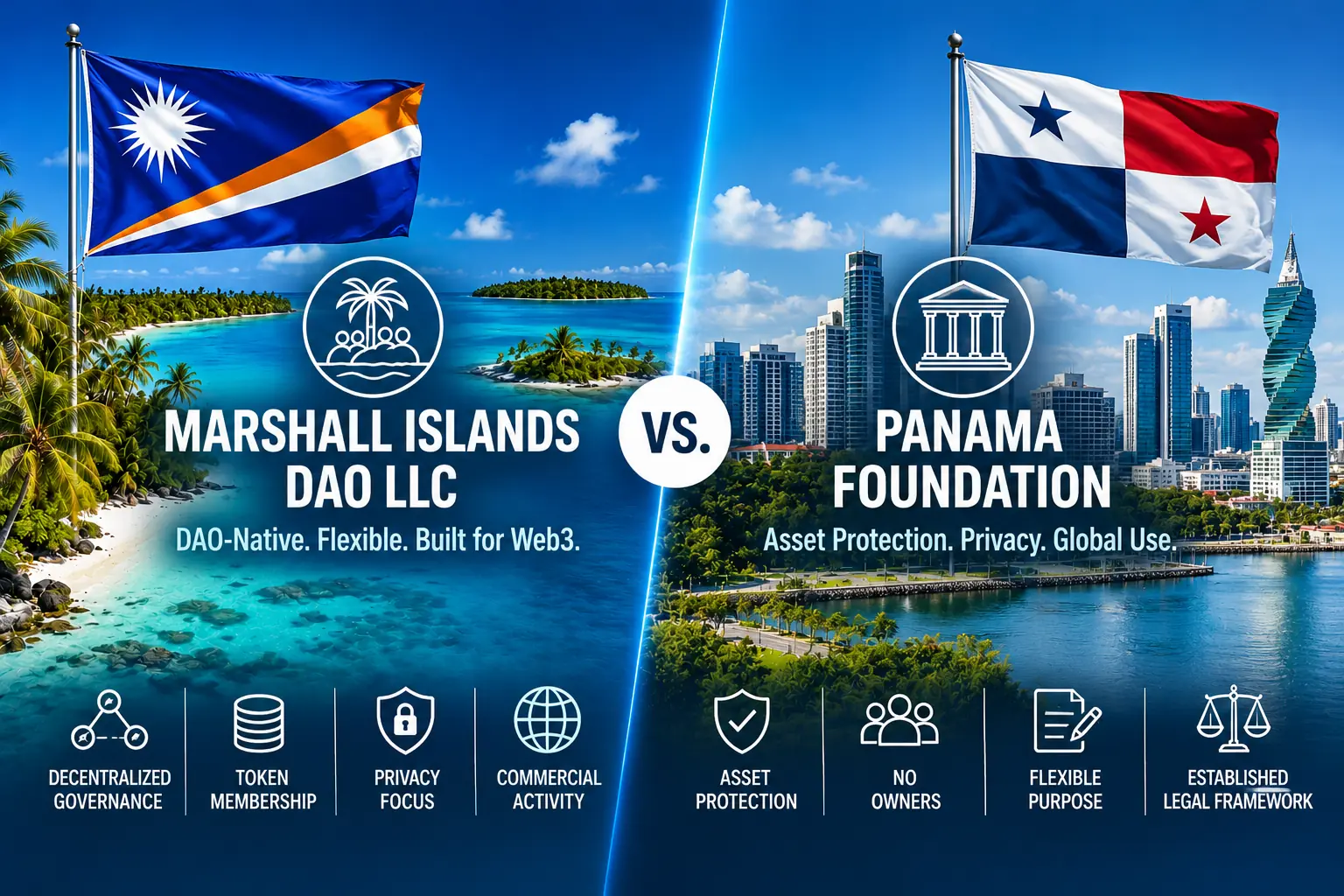
Panama's Law 25 of 1995, as summarized by Pardini & Asociados, created the Private Interest Foundation: a legal entity with no shareholders, run by a council on behalf of a founder's chosen beneficiaries. It was built for family wealth and asset protection. Many crypto founders now ask whether it also works for a token project.
The honest answer depends on who is meant to control the project. A foundation puts legal authority in a council. A Marshall Islands DAO LLC can put it in tokenholders and code.
This guide compares Marshall Islands DAO LLC vs Panama Foundation across the points founders actually weigh: governance, tokenholder rights, treasury, tax, privacy, and cost.
How Does Each Structure Work?
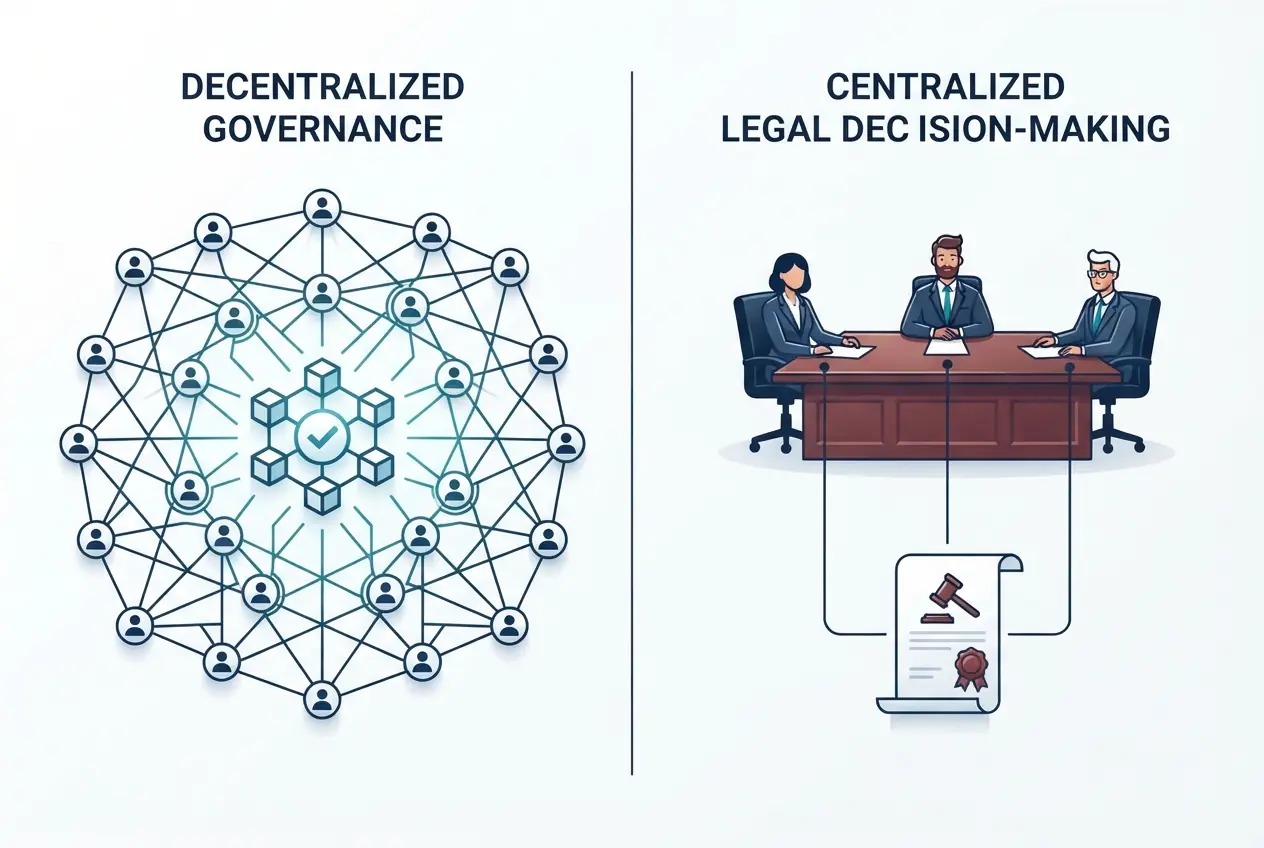
A Marshall Islands DAO LLC is a token-governed company, while a Panama foundation is a council-governed patrimony with no owners. The two start from opposite ideas about who holds power.
The Marshall Islands DAO LLC
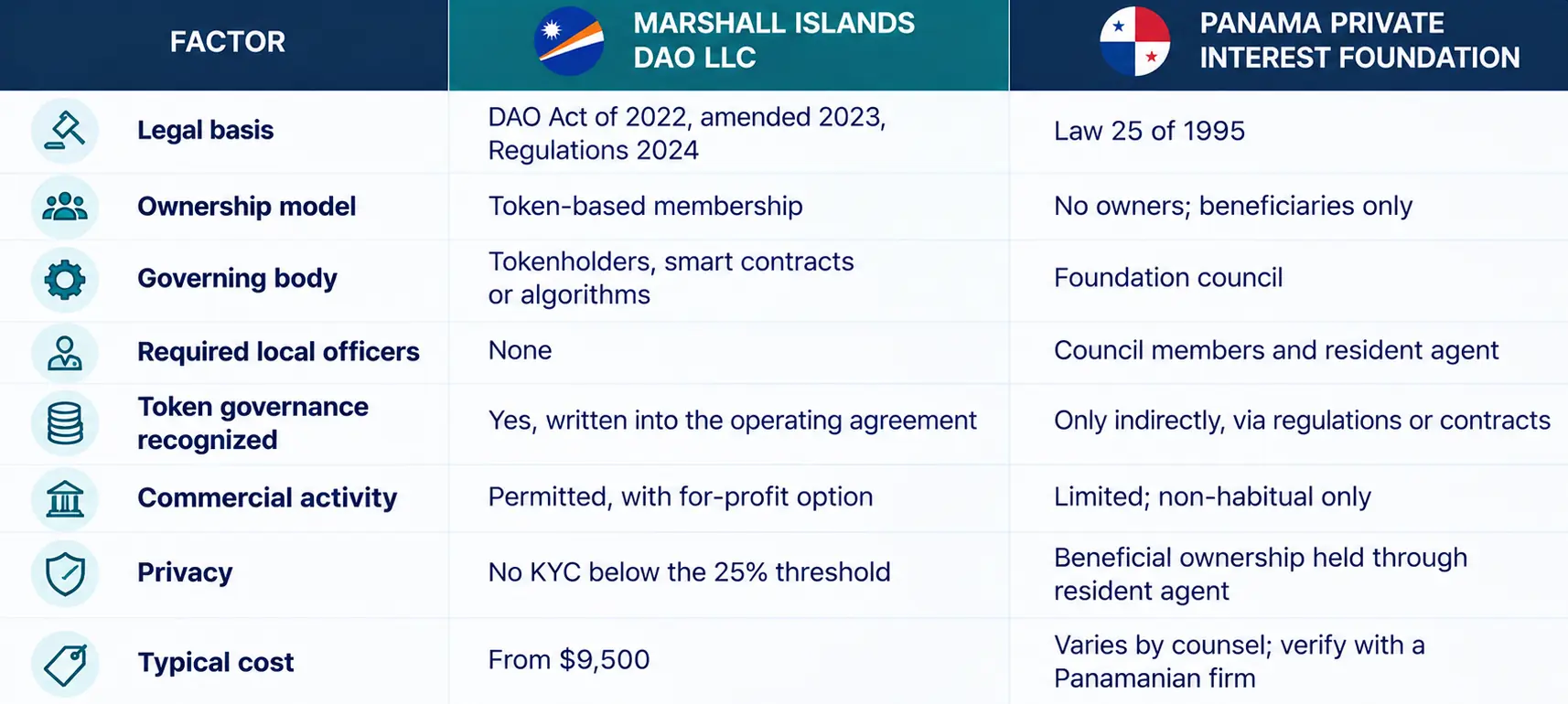
The RMI DAO Act of 2022, amended in 2023 and supplemented by the 2024 Regulations, recognizes a DAO as a limited liability company with its own legal personality. Membership can be defined by token holdings, and governance can run through smart contracts, token votes, or algorithms.
Key features include:
- Manager-less operation, with no required directors or officers
- Non-profit option (no entity-level tax, no distributions) or for-profit option (3% Gross Revenue Tax on qualifying revenue)
- No KYC for general members, with disclosure only for holders of 25% or more
- Formation from $9,500, typically in under 30 days, through MIDAO as the sole registered agent
The Panama Private Interest Foundation
A Panama foundation is created by a founder, who endows it with assets and registers a charter with the Public Registry. It is managed by a foundation council and benefits named beneficiaries. There are no shareholders or members.
Key features include:
- A council of at least three individuals, or one legal entity
- A minimum endowment of US$10,000
- A Panamanian resident agent, who must be a lawyer or law firm
- An optional protector and private regulations that guide the council
- A non-profit purpose, with only non-habitual commercial activity
What Are the Key Differences Between a DAO LLC and a Panama Foundation?
The biggest difference is where authority sits: with tokenholders in a DAO LLC, and with a council in a Panama foundation. Everything else follows from that choice.
Governance and Control
In a DAO LLC, the operating agreement can point directly at the project's governance contracts. A passed vote is a recognized company action, with no separate off-chain approval step.
In a Panama foundation, the council holds legal authority. Community voting can exist, but it works only as a contractual or regulatory arrangement that the council agrees to follow.
This matters most when a vote is controversial. A DAO LLC is built so the outcome of the vote is the decision, while a foundation council keeps its own duties and discretion under Panamanian law. Founders who want algorithmic or manager-less operation will find the foundation model hard to adapt, because it assumes a human council at the center.
Tokenholder Rights and Legal Ownership
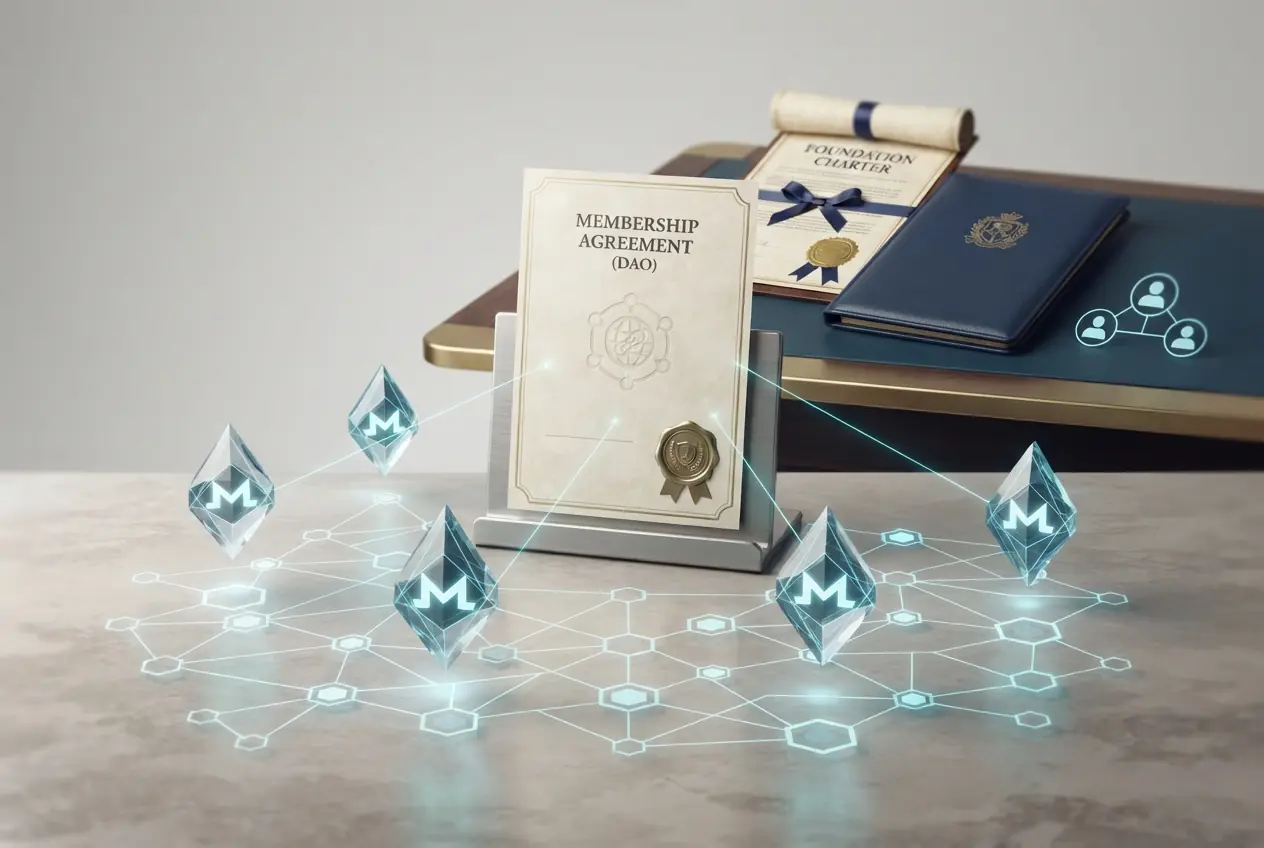
A DAO LLC lets token ownership map to membership. Non-profit governance tokens with no economic rights are carved out of securities treatment under RMI law, although this does not override other countries' rules.
A foundation has no equity for tokens to represent. Tokenholders would hold contractual claims at best, which is a weaker and less certain position.
In practice, this affects three things:
- Voting power: In a DAO LLC, tokens can carry formal membership rights. In a foundation, they can only signal preferences to the council.
- Liability: DAO LLC members are shielded from the entity's debts. Foundation beneficiaries are not owners at all, so the question is different.
- Exit and transfer: DAO LLC membership can move with the token. Foundation beneficiary rights are set by the charter and regulations.
Treasury Management and Commercial Activities
A DAO LLC can hold a treasury, run products and, if for-profit, earn revenue. A foundation is meant to hold and preserve assets, and Panama law limits regular commercial trading.
That makes a foundation a poor fit for an active protocol, but a reasonable fit for holding assets or intellectual property.
A DAO LLC also keeps treasury control closer to the community. Spending can be tied to on-chain proposals, and the entity can hold a wallet as a named legal asset and open banking relationships in its own name.
Our guide to DAO compliance requirements covers what institutions expect to see from a treasury-holding entity.
Taxation, Privacy and Compliance
Panama taxes on a territorial basis, so foreign-source income is generally not taxed there, while Panama-source income is. Foundation privacy is also narrower than it once was, since beneficial ownership information is now held through resident agents.
The RMI model keeps general tokenholders pseudonymous while still meeting FATF-aligned standards. Only holders of 25% or more of governance rights are disclosed.
Under the RMI model, a non-profit DAO LLC pays no entity-level tax and makes no distributions, while a for-profit DAO LLC pays a 3% Gross Revenue Tax on qualifying revenue earned outside the RMI. That choice is permanent, so it should be made at formation.
Both structures are legitimate only when taxes and reporting are handled properly. Privacy here means protecting tokenholders, not avoiding obligations.
Our DAO tax guide explains the RMI options in detail.
Formation and Ongoing Maintenance
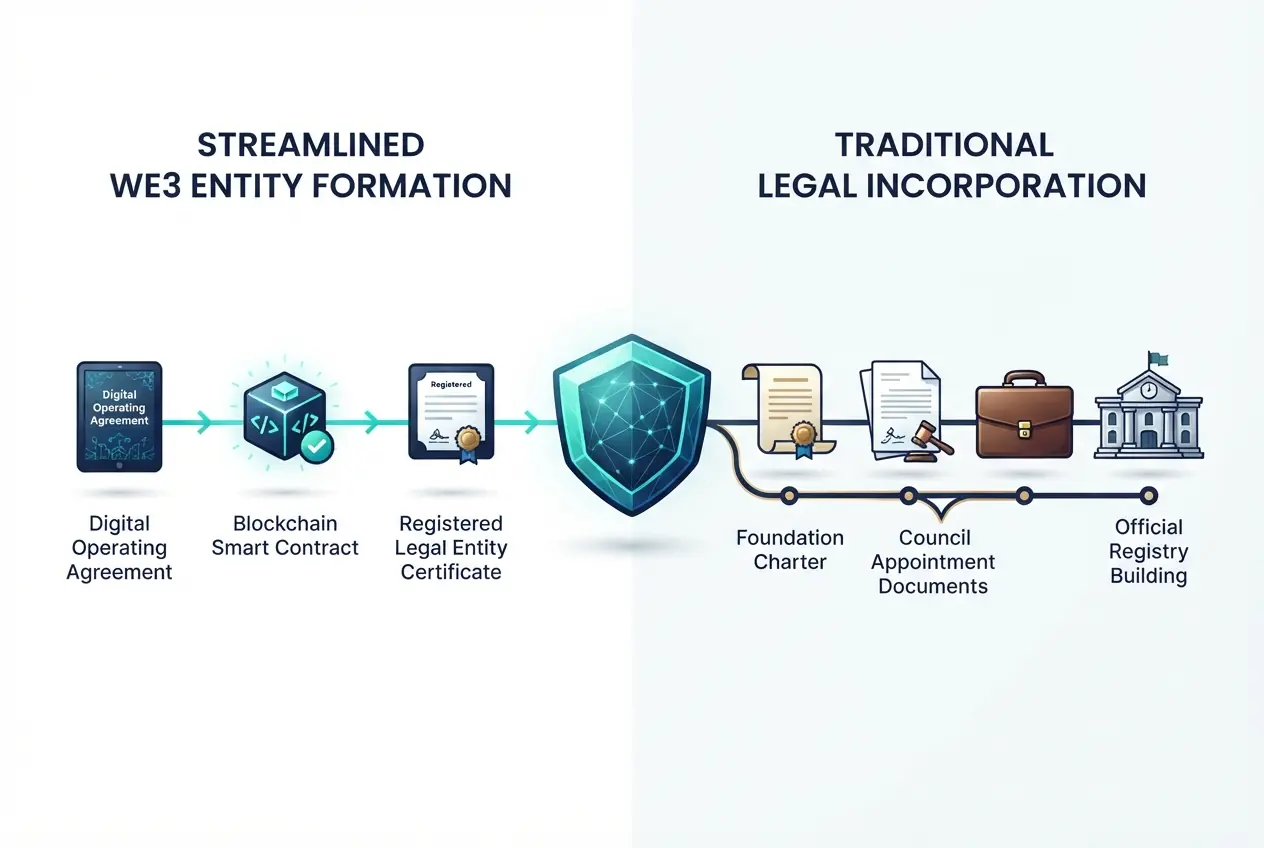
DAO LLC formation is one filing process with one registered agent. A foundation needs a charter, council, resident agent, and registry steps, and ongoing fees. Annual Panama costs are quoted differently by different firms, so confirm current figures with Panamanian counsel.
The setup steps differ in a way that affects timing:
- DAO LLC: Choose non-profit or for-profit, prepare the operating agreement, submit through MIDAO, and complete beneficial ownership checks. Formation typically takes under 30 days.
- Panama foundation: Fund the minimum endowment, appoint council members and a resident agent, draft the charter and regulations, and register with the Public Registry.
The foundation also carries a recurring need for human council members and a local lawyer. A DAO LLC does not require local officers.
Which Structure Fits Which Type of Project?
Choose a DAO LLC when the community is meant to govern, and a foundation when a small group needs to hold assets for specific beneficiaries. The right answer depends on the project's purpose.
When a Marshall Islands DAO LLC Is the Better Fit
A DAO LLC suits most token-governed projects:
- Protocols with on-chain voting that should carry legal weight
- Projects with a global, pseudonymous tokenholder base
- Teams that want no required directors
- Treasuries that need a bank-ready entity with limited liability
Founders who want the full case can read our guide to what a crypto legal wrapper is.
When a Panama Foundation May Make Sense
A foundation can work in narrower cases:
- Holding intellectual property or long-term reserves
- Estate and succession planning for founders
- A founder-controlled holding entity beneath a larger structure
Even then, many teams pair it with an operating company. A foundation rarely works as the sole home of a live, community-governed protocol.
Hybrid designs are common. A DAO LLC can act as the governance layer while a separate entity handles contracts and employees, as covered in our guide to incorporating a token project.
Choose Control Before You Choose a Country
Pick the structure that matches who truly governs your project, then let the jurisdiction follow. A foundation optimizes for stewardship by a council. A DAO LLC optimizes for governance by the community.
For a live protocol, that usually points to the DAO LLC: token membership, no required managers, privacy with compliance, and a lower cost of entry. A foundation remains a useful tool for holding assets behind the scenes.
Explore Marshall Islands DAO LLC incorporation options with MIDAO
Frequently Asked Questions
Can a Panama foundation be converted directly into a Marshall Islands DAO LLC?
There is generally no simple one-step conversion, because the two entities have different legal foundations. Teams usually form a new DAO LLC and transfer assets and rights across. Panamanian and RMI counsel should confirm the process.
Can a Marshall Islands DAO LLC legally serve as the founder or beneficiary of a Panama foundation?
A foundation can generally have a legal entity as a founder or beneficiary, but the details depend on Panamanian law and the foundation's charter. Counsel should confirm this before any structure is built. Tax and reporting duties also need review.
What happens if a foundation council refuses to implement a decision approved by DAO tokenholders?
In a foundation, the council holds legal authority, so tokenholder votes are not automatically binding. Any enforcement would depend on the contracts or regulations in place. This is a core reason many community-governed projects prefer a DAO LLC.
Can either structure own real-world assets, such as property or shares in other companies?
Both can generally hold assets, including shares in other companies. A foundation is often used for this purpose, and a DAO LLC can do so within its operating agreement. Local property and tax rules still apply.
What happens to treasury assets if a Marshall Islands DAO LLC or Panama foundation is dissolved?
Dissolution follows each structure's governing documents and applicable law. A DAO LLC distributes or transfers assets under its operating agreement, while a foundation follows its charter and regulations. Plan the dissolution terms at formation and confirm them with counsel.