

How Law Firms Can Partner with MIDAO to Serve Crypto Clients
An overview of how law firms can expand their Web3 services through MIDAO, covering DAO LLC formation support, partnership workflows, crypto client needs, and the infrastructure required for specialized legal structures.
The Web3 industry's total market cap grew from $1.7 trillion to roughly $3.5 trillion in 2024 alone, according to Polsinelli's Web3 Outlook for 2025, National Law Review, February 2025, with private litigation against DAOs, DeFi protocols, and token projects rising in parallel. As that growth continues, attorneys at every firm are encountering clients who operate in this space.
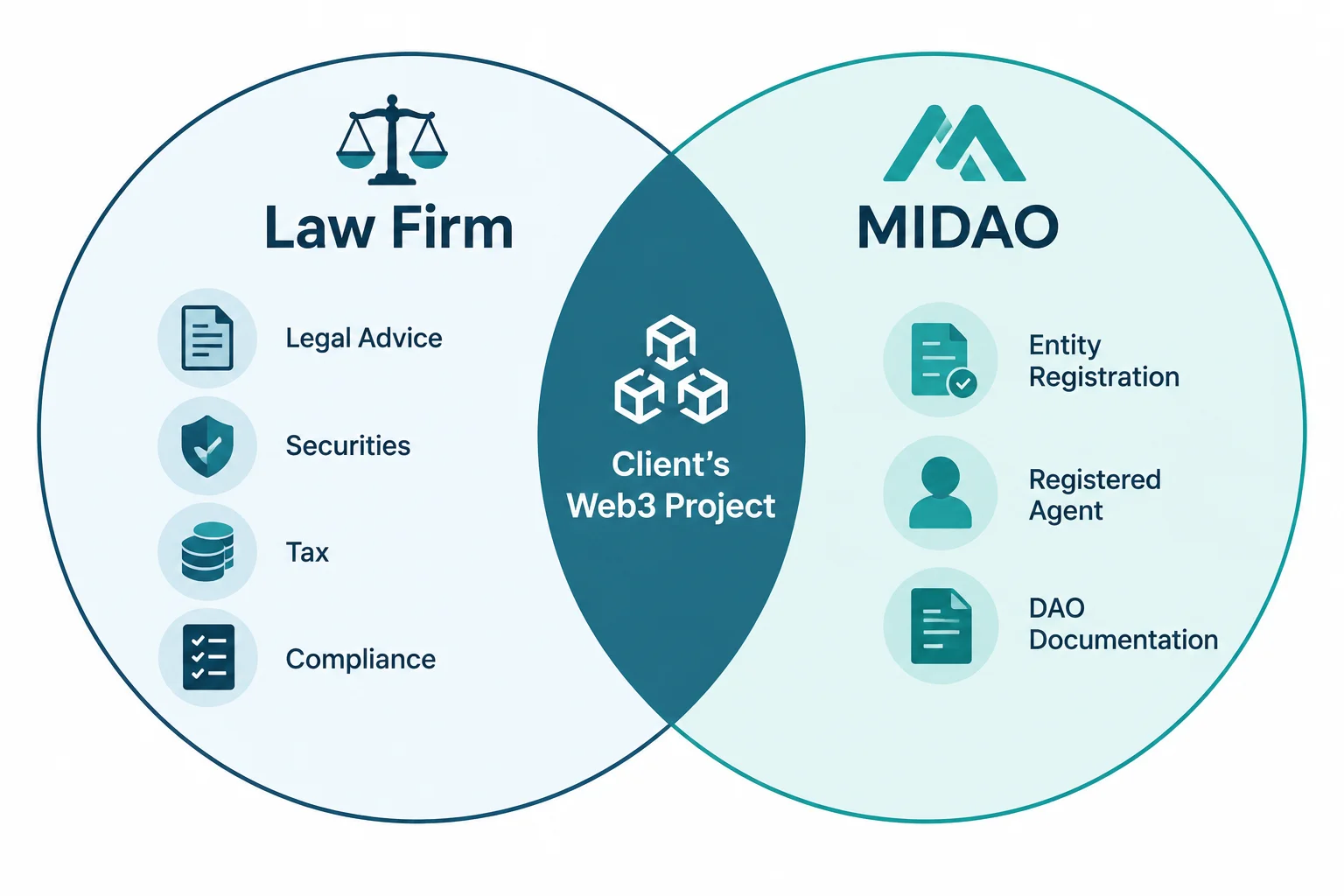
However, standard corporate formation often falls short for decentralized entities. While any competent attorney can set up a Delaware LLC or Cayman foundation, a Marshall Islands DAO LLC, purpose-built for token-based governance, requires an authorized registered agent with specialized Web3 formation templates and ongoing tailored compliance.
MIDAO is that infrastructure layer. This article explains where the partnership model works, what MIDAO provides that complements legal advisory services, and how the workflow between a law firm and MIDAO operates in practice.
Why Do Crypto Clients Need Specialized Legal Structures?
Traditional company structures were not designed for the way Web3 projects work. A Delaware LLC requires named members, identified managers, and human decision-makers. A Cayman Foundation requires a board of directors with fiduciary duties that can override community governance. Neither was built for token-based membership, algorithmic governance, or pseudonymous communities making collective decisions on-chain.
Clients operating in this space face a specific set of risks without the right structure:
- Unlimited personal liability: Without a legal entity, developers, contributors, and governance participants in an unincorporated DAO can be treated as general partners, personally liable for the organization's obligations. Court decisions in CFTC v. Ooki DAO (2022) and Samuels v. Lido DAO (2024) have made this concrete.
- No contractual capacity: The protocol cannot sign agreements with auditors, exchanges, or service providers. Individual contributors sign personally and carry that risk.
- No asset ownership: Intellectual property, treasury wallets, and platform accounts cannot be held by an entity that does not exist. Enforcement of IP rights and clean ownership transfers require a recognized legal person behind the project.
- Banking barriers: Most financial institutions require a recognized legal entity before opening accounts or processing transactions on behalf of an organization.
Web3 clients typically need a combination of services their attorney can provide and services that require specialized formation infrastructure: entity formation, token structuring, governance design, and regulatory guidance, all coordinated.
Our article on what a crypto legal wrapper is and why Web3 projects need one explains the foundational concept for attorneys whose clients are new to this space.
Where Do Law Firms Typically Need Support With Web3 Entity Formation?
Most law firms advising crypto clients have deep expertise in securities law, tax, regulatory compliance, and commercial agreements. The gap is usually on the formation side, specifically the DAO LLC infrastructure that most attorneys do not have the government relationships, formation templates, or registered agent capacity to provide.
DAO Formation and Legal Wrappers
The Marshall Islands DAO LLC is a purpose-built entity type that requires an exclusive registered agent relationship with the RMI government to form. MIDAO holds that exclusive public-private partnership. No other registered agent can offer this structure. Law firms whose clients need a DAO LLC for token governance, on-chain treasury management, or decentralized protocol operations cannot form this entity independently; they need a formation partner.
The formation process involves specialized documentation: operating agreements designed for token-based governance, charter documents that reference smart contracts as the legal governance authority, and registration with the RMI government within a clearly defined process. MIDAO's templates have been refined across 250+ formations.
Jurisdiction Selection
Attorneys advising Web3 clients often navigate jurisdiction selection across multiple options:
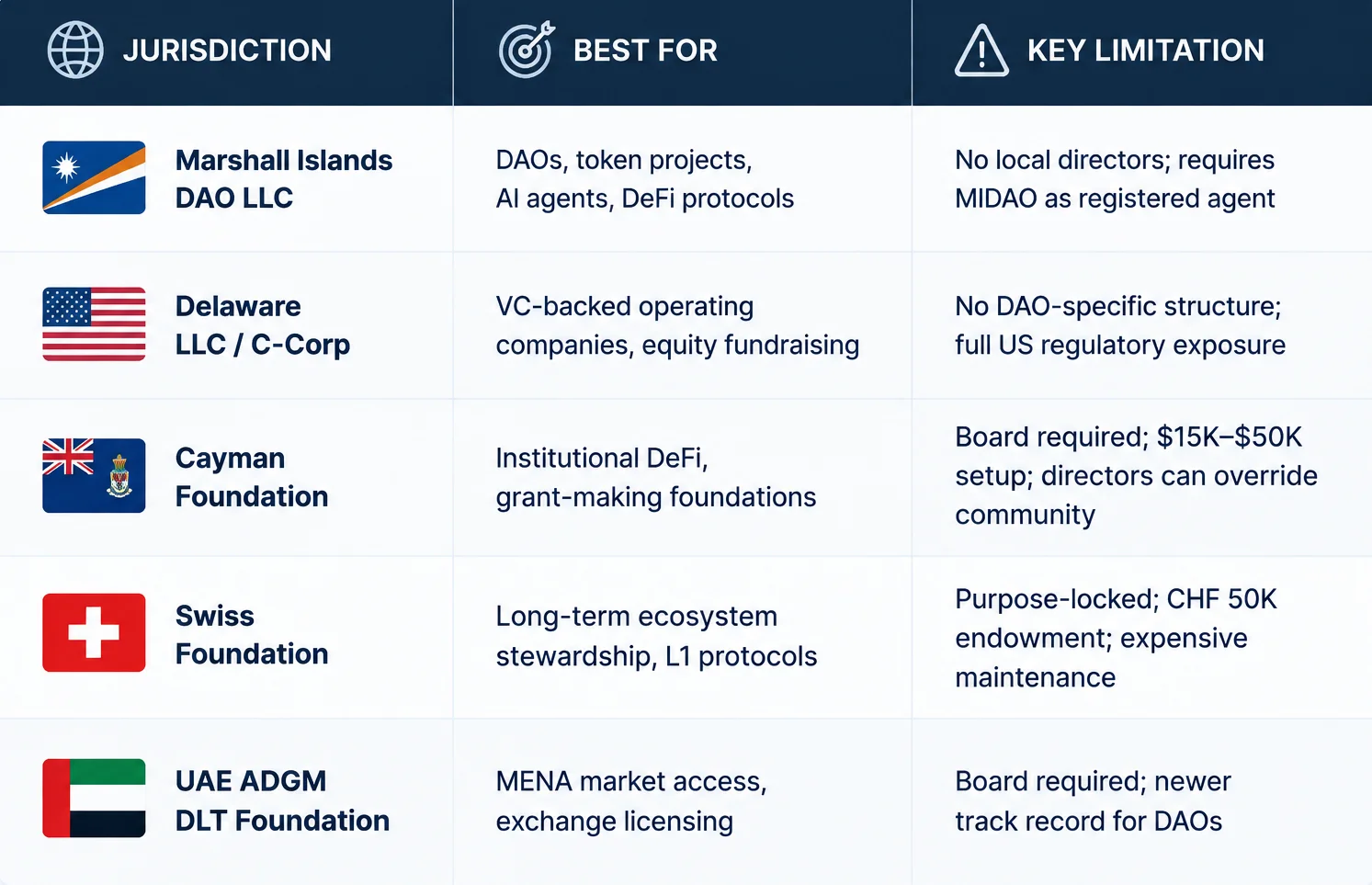
MIDAO can support attorney decision-making by explaining how the DAO LLC structure compares to alternatives, what formation and compliance costs look like, and how the structure will function operationally for the client's governance model. The attorney retains the advisory relationship and legal strategy. MIDAO provides the infrastructure specifics and formation capability.
Our ranked guide to the best crypto-friendly jurisdictions in 2026 is a useful reference for attorneys starting these conversations with clients.
Token and Governance Infrastructure
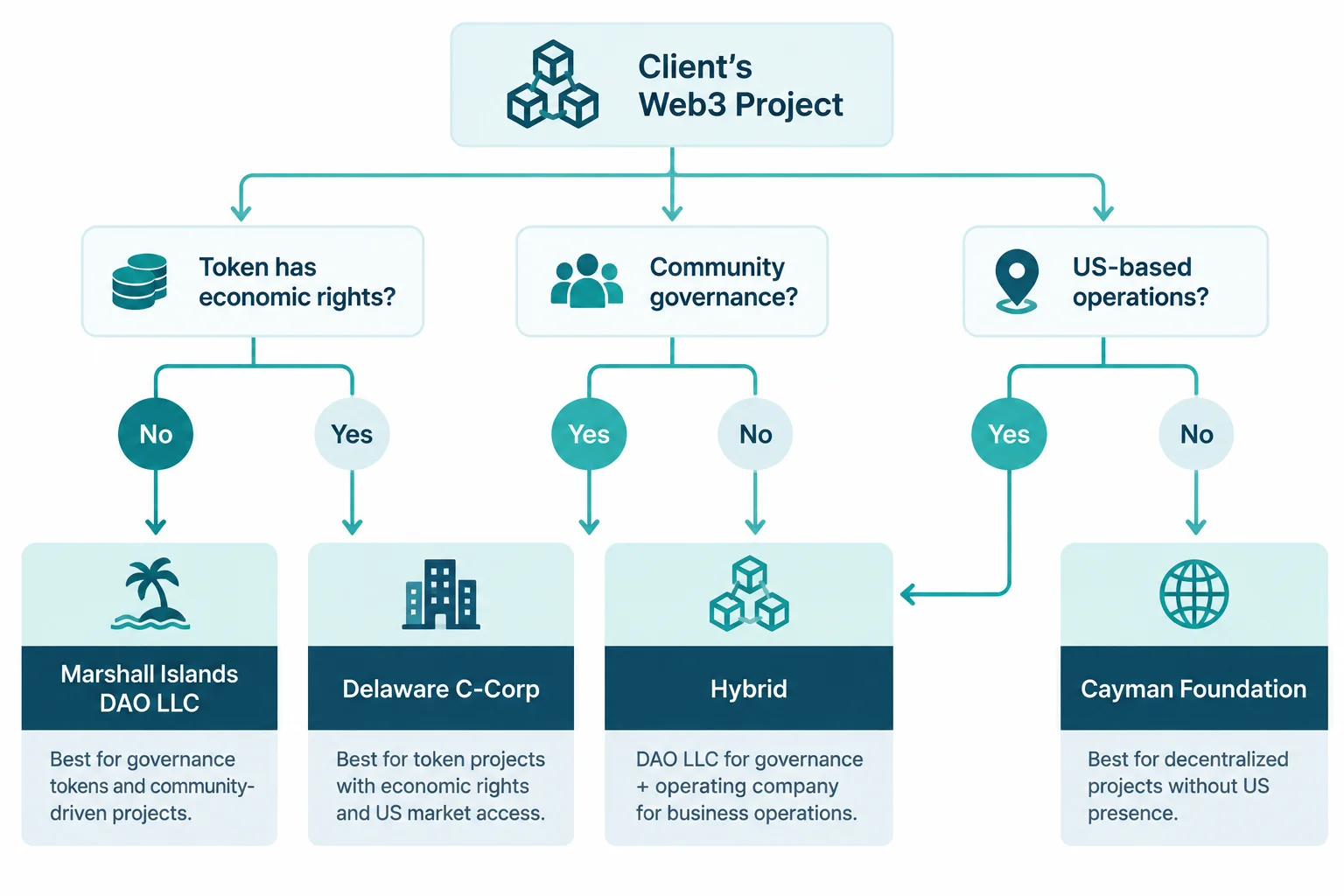
Token design intersects directly with entity structure in ways that affect the attorney's advisory work. Whether the client's governance tokens carry economic rights or governance rights only determines whether the entity should be non-profit or for-profit, which in turn affects the securities law analysis.
Non-profit RMI DAO LLC governance tokens with no economic rights are explicitly not treated as securities under RMI statute. For-profit tokens with economic rights require separate securities analysis for each target jurisdiction. MIDAO helps attorneys and their clients understand these structural consequences early, before the token is designed and issued, when changing course is inexpensive rather than after launch when restructuring is complex.
See our article on token issuance and crypto securities law compliance for a full breakdown that can support attorney advisory work.
What Does MIDAO Provide to Law Firm Partners?
MIDAO is a formation and infrastructure partner, not a legal services provider. The distinction matters: MIDAO forms entities, manages registered agent relationships, and maintains the RMI government relationship. MIDAO does not provide legal advice, draft bespoke operating agreement terms, or advise on securities law or tax strategy. Those remain the attorney's domain.
DAO LLC Formation Services
MIDAO provides:
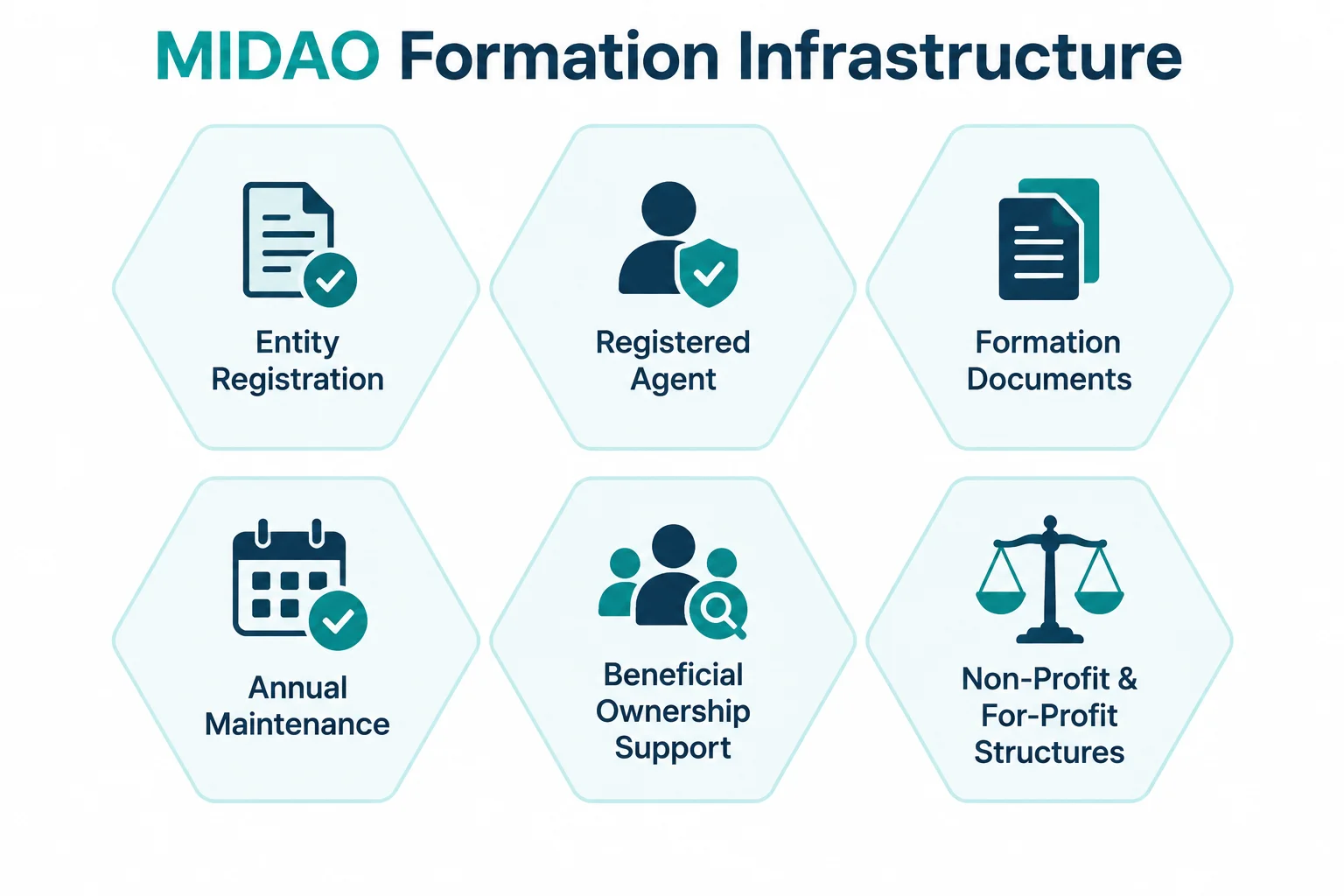
- Entity registration with the RMI government, including all required documentation and government filing coordination
- Registered agent services on an ongoing basis, as the exclusive registered agent for RMI DAO LLCs under the government partnership
- Formation document templates refined across 250+ incorporations, covering token-based governance, algorithmic management provisions, and on-chain governance references
- Ongoing entity maintenance including annual filings, beneficial ownership reporting support, and registered agent correspondence management
Formation typically completes in under 30 days. Starting cost is $9,500, covering registration, first-year registered agent services, and formation document preparation. Annual maintenance applies in subsequent years. Fees can be paid in crypto, which most DAO treasuries prefer.
Web3-Specific Entity Knowledge
MIDAO specializes in entity structures for every major Web3 project type, not only traditional DAOs. This matters because attorneys with general corporate practices encounter clients from across the Web3 ecosystem:
- DAOs and decentralized protocols: governance entities for token-holder communities
- DeFi protocols: governance layers for treasury management and community-controlled protocols
- NFT projects: IP-holding entities for community-governed collections
- Investment DAOs: for-profit structures for pooled capital with member economic participation
- DePIN projects: entities that bridge on-chain governance with physical infrastructure ownership
- AI agent projects: Digital LLC structures that authorize algorithmic management
Support for Non-Profit and For-Profit DAO Models
MIDAO supports both entity variants. The non-profit DAO LLC carries zero entity-level tax in the Marshall Islands and the statutory securities carve-out for governance tokens. The for-profit DAO LLC allows profit distributions and economic token rights, subject to a 3% Gross Revenue Tax on qualifying revenue outside the RMI. Attorneys advising clients on tax strategy and securities positioning need to understand both options.
MIDAO's DAO tax guide covering non-profit vs. for-profit structures is a resource attorneys can use with clients.
How Does the Law Firm + MIDAO Partnership Model Work?
The workflow is straightforward. The attorney retains the client relationship and all legal advisory responsibilities. MIDAO handles the formation infrastructure.
- Client assessment. The law firm evaluates the client's business model, regulatory needs, token design, and governance goals. This is the attorney's work: understanding what the client is building and what legal structure serves those goals.
- Entity strategy discussion. The attorney consults MIDAO on formation options, structure specifics, and the practical implications of non-profit versus for-profit designation. MIDAO explains how the structure will function operationally and what documentation is needed.
- Legal advisory work. The attorney continues advising the client on securities considerations, tax treatment, regulatory compliance, commercial agreements, and any jurisdiction-specific requirements for the underlying assets or token distribution. This work is entirely outside MIDAO's scope.
- Entity formation. MIDAO prepares the formation documents, coordinates the RMI government filing, and registers the entity. The attorney reviews documentation and provides legal input on operating agreement terms as needed.
- Ongoing registered agent relationship. MIDAO manages annual filings, beneficial ownership updates, and government correspondence on an ongoing basis. The attorney remains the client's primary legal advisor for any regulatory or compliance questions that arise.
Which Client Types Create the Best Partnership Opportunities?
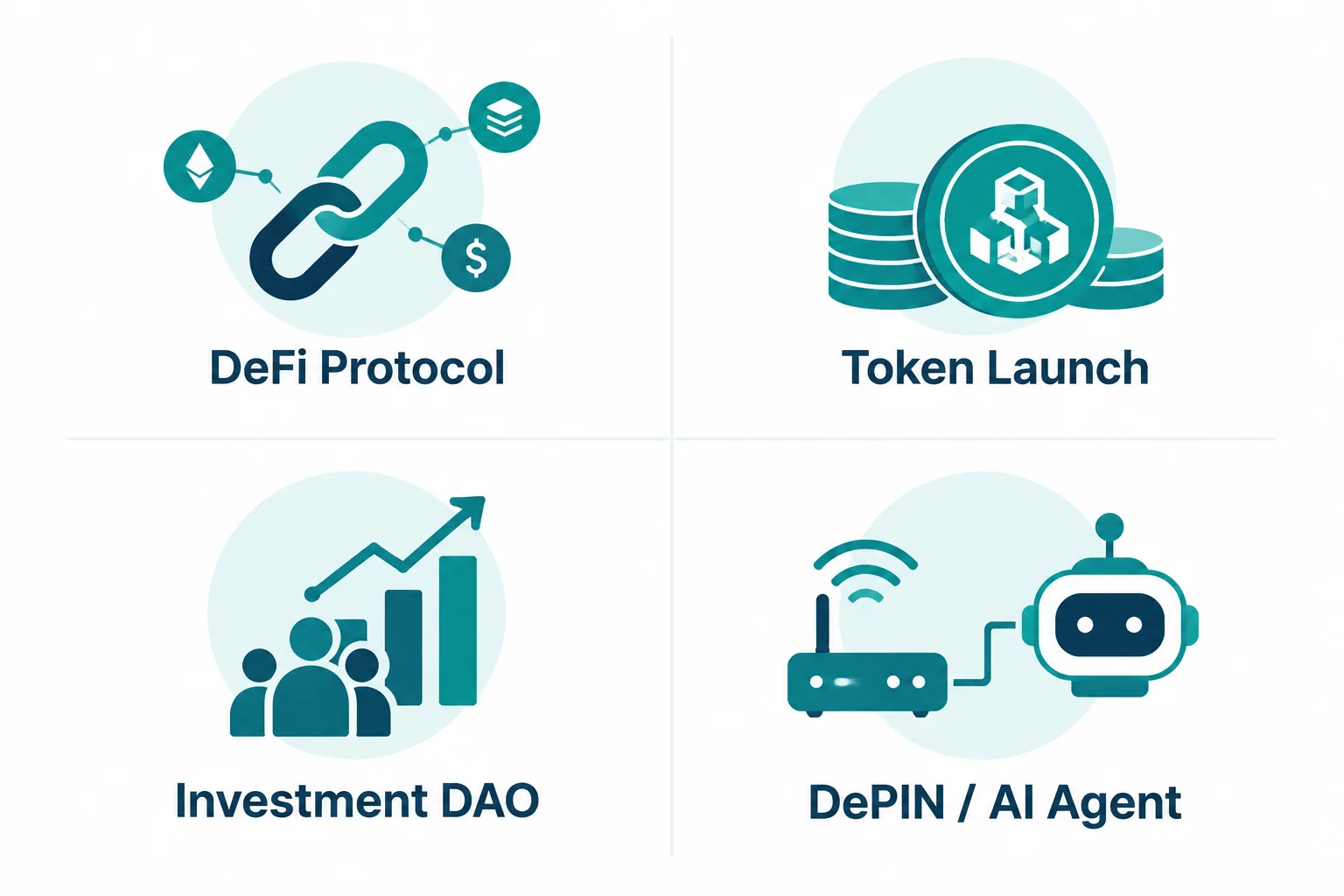
DeFi Protocol Clients
DeFi protocols need a governance entity that can hold the treasury, govern protocol upgrades through on-chain voting, and provide liability protection for contributors, all without centralizing control. The RMI DAO LLC is the purpose-built solution.
The attorney's work covers securities analysis for governance tokens, tax treatment of protocol revenue, and commercial agreements with service providers. MIDAO forms the entity and maintains the registered agent relationship.
Token Launch Projects
Token projects need a defined issuer of record, a clean legal separation between founders and the community governance layer, and an entity that holds the IP while the token is distributed.
The non-profit DAO LLC, paired with a Delaware C-Corp operating company, is the most common structure. Attorneys handle securities positioning and VC documentation. MIDAO forms the DAO LLC governance layer.
Investment DAOs
Investment DAOs with pooled capital and economic participation by members require a for-profit structure with careful securities law analysis. The attorney's advisory work is central: understanding how distributions are characterized, what investor protection obligations apply, and how the token structure interacts with securities law across target markets. MIDAO provides the for-profit DAO LLC formation and registered agent infrastructure.
DePIN and AI Agent Projects
Emerging project types, including DePIN networks deploying physical infrastructure and AI agent projects operating autonomously, need entities that support algorithmic management and can hold both on-chain and physical assets. The RMI DAO LLC and Digital LLC structures are the best available options. Most attorneys are new to these use cases. MIDAO can help explain the formation options and what the structures support operationally.
Our guides on DePIN legal structure and legal entities for AI agents are resources attorneys can use to get up to speed quickly.
The Future of Crypto Legal Services Is Collaborative
Crypto clients increasingly need specialized legal structures that go beyond what traditional corporate formation provides. Law firms bring the legal expertise: securities analysis, tax strategy, regulatory compliance, and commercial agreements. MIDAO brings the formation infrastructure: the exclusive RMI government partnership, 250+ formation templates, and the registered agent relationship that makes the Marshall Islands DAO LLC available to any client worldwide.
A partnership approach allows attorneys to offer more complete Web3 solutions without building specialized formation infrastructure in-house. As the Web3 ecosystem grows and client needs become more complex, the firms best positioned to serve them will be those that combine their legal expertise with infrastructure partners who have built the systems that these structures actually require.
Interested in partnering with MIDAO to serve your Web3 clients? Contact the MIDAO team to discuss how the law firm partnership model works and what support is available for your clients' entity formation needs.
Frequently Asked Questions
Does partnering with MIDAO require a law firm to specialize in blockchain law?
No. MIDAO works with general corporate attorneys, international law firms, and specialist blockchain practices. The formation infrastructure MIDAO provides does not require the attorney to be a blockchain expert. What matters is that the attorney understands the client's business model and regulatory context well enough to advise on legal strategy. MIDAO handles the formation specifics and can explain how the structures work operationally to support the attorney's understanding.
Can a law firm remain the client's primary legal advisor when using MIDAO?
Yes, and that is the intended model. MIDAO is a formation and infrastructure partner, not a legal services provider. MIDAO does not provide legal advice, represent clients in legal proceedings, or advise on securities law, tax strategy, or regulatory compliance. The attorney retains the client relationship and all legal advisory responsibilities. MIDAO provides entity registration, registered agent services, and formation documents.
Can MIDAO work with international law firms serving global crypto projects?
Yes. MIDAO's clients come from every major jurisdiction, and the Marshall Islands DAO LLC is specifically designed for globally distributed organizations with no local presence requirements. International law firms advising clients on offshore entity selection, cross-border token launches, or global governance structures can work with MIDAO directly. Formation documentation and registered agent correspondence are handled entirely remotely, and MIDAO accepts payment in crypto.