
The joint SEC and CFTC interpretation of March 17, 2026, as summarized by Jenner & Block, treats meme coins as digital collectibles rather than securities. The same analysis warns that a non-security token can still be sold in an investment contract if the seller promises managerial efforts that buyers rely on.
That second point is the one meme coin teams tend to miss. A meme coin can be a joke on day one and a treasury, a brand and a business by month three. The rules for what the team does do not disappear because the token is a meme.
Most meme coins begin as community projects with pseudonymous founders, informal teams and no organization behind them. As they grow, they need to hold funds, pay contributors, negotiate exchange listings, and sign agreements. A decentralized community does not automatically have legal personality, so someone ends up signing in their own name.
This guide explains why meme coin teams need a legal wrapper and what a meme coin legal entity can and cannot do. For the wider picture, see our guide to what a crypto legal wrapper is.
What Is a Legal Wrapper for a Meme Coin Project?
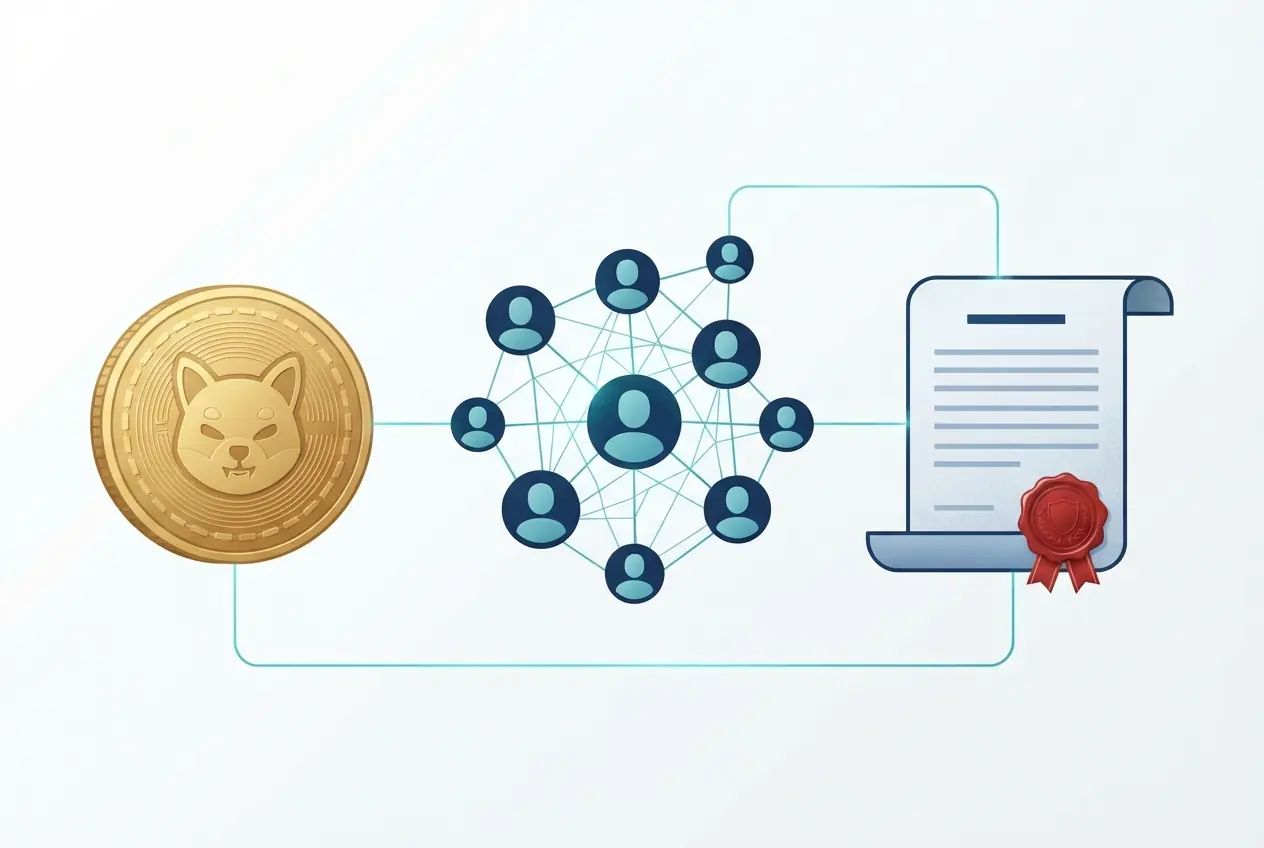
A legal wrapper is a recognized legal entity connected to a blockchain project, which acts for the project in the offline world. The token lives on-chain, while the entity signs, holds, and answers for things off-chain.
How a Legal Wrapper Works
The wrapper separates three things that are often blurred together:
- The token: the on-chain asset that holders trade and use.
- The holders: a changing, often anonymous group of people.
- The entity: the party responsible for specific project activities, such as contracts, treasury custody, and intellectual property.
Creating a token or deploying a smart contract does not create a company or a recognized organization. Without an entity, the law may treat people who act together as a general partnership.
Our guide on why unincorporated DAOs are legally exposed shows how courts have handled that.
Why Meme Coin Teams Face Unique Legal Challenges
Meme coin projects share a few traits that make the gap more serious:
- Founders and contributors are often anonymous or pseudonymous.
- The treasury is controlled by wallets and community members rather than an asset-holding entity.
- Responsibility for marketing, partnerships, and operations is unclear.
- Fast growth creates contracts and administrative duties before anyone has planned for them.
5 Reasons Meme Coin Teams Need a Legal Wrapper
Meme coin teams need a wrapper to gain a legal identity, organize the treasury, sign contracts, formalize governance, and prepare for compliance. Each reason below solves a problem that grows with the project.
1. Establish Legal Identity and Reduce Personal Liability Risks
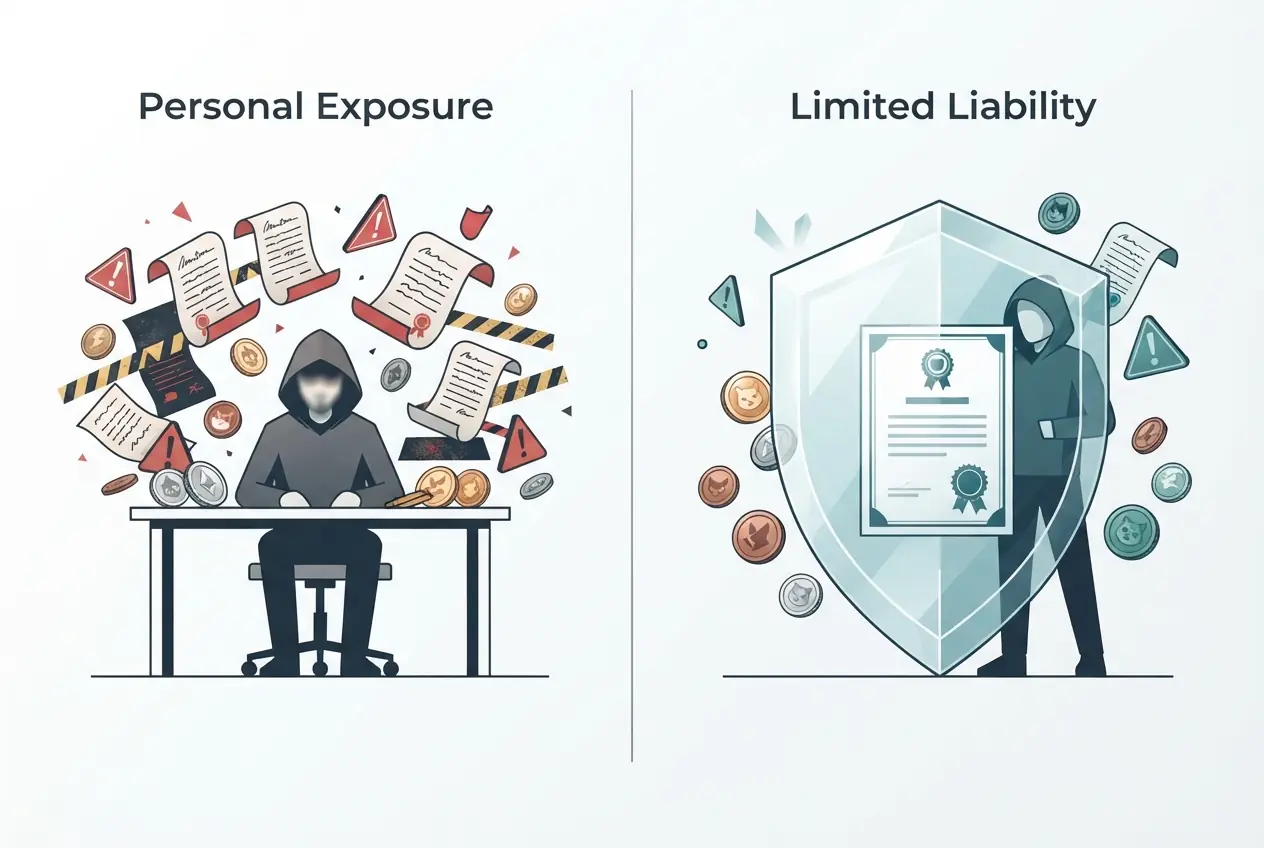
An entity can enter agreements and take on obligations in its own name. That is the core benefit.
Without one, a founder who signs a marketing agreement, hires a developer, or receives funds may be personally exposed if something goes wrong. That includes disputes with contractors, claims from partners, or customer complaints.
A wrapper does not protect anyone from fraud, misconduct, or personal legal duties. Limited liability covers ordinary business obligations, not wrongdoing. Any team that treats it as a shield for bad behavior is misusing it.
The practical effect is that ordinary claims, such as a contractor dispute or an unpaid invoice, are directed at the entity first. For teams of pseudonymous contributors, that is a meaningful difference from every contributor being a potential defendant.
Our guide on what happens if your DAO gets sued walks through how that plays out.
2. Create a Formal Structure for Community Treasury Management
A legal structure defines who owns the treasury and who can spend it. That answers the first question every dispute raises: who is in charge of the money?
A formal arrangement can cover:
- How funds are held and managed
- Who may authorize spending, liquidity initiatives, grants, and contributor payments
- How multisig wallets and on-chain votes tie to the entity's governing documents
- How disputes over control of treasury assets are handled
The goal is alignment. A multisig that follows the operating agreement is easier to defend than one that follows habit.
Treasury disputes are common in meme coin communities. A signer disappears, a wallet is drained, or a faction wants to redirect funds. With a legal entity and written rules, there is a document that says who has authority and how it can be changed. Without one, the argument often ends in a public fight with no neutral referee.
3. Sign Contracts and Build Commercial Partnerships
An entity gives the project a contracting party. It can sign with developers, marketing agencies, service providers, and event organizers.
It can also be the counterparty for exchange-related commercial arrangements where one is needed. Listing requirements vary by venue, so confirm what each exchange expects.
A wrapper can hold domains, trademarks, branding, and other intellectual property. That reduces reliance on a founder signing everything personally, and keeps the brand with the project if people change.
4. Formalize Governance and Tokenholder Participation
A legal structure defines how governance tokens relate to legal membership. It also sets voting procedures, proposal thresholds, and decision-making authority.
This matters because a meme coin community often votes informally. A wrapper clarifies:
- Which decisions the community controls
- Which decisions need authorized representatives
- How protocol upgrades and changes in leadership are handled
- How governance disputes are resolved
Our DAO compliance guide covers the basics founders should expect.
5. Support Regulatory Compliance and Long-Term Operations
An entity gives the team a place to keep records, work with accountants and lawyers, and respond to counterparties. That makes compliance practical rather than improvised.
The compliance questions depend on what the project actually does. Securities, consumer protection, AML, and tax rules can all be relevant.
The March 2026 SEC and CFTC interpretation looks at a token's features and the transactions around it. It does not declare every meme coin outside securities law. Ordinary community meme coins sit differently from projects that offer economic rights, revenue sharing or regulated services.
Incorporation does not give regulatory approval and does not remove compliance duties. Our token issuance guide explains what to review before launch.

How Can a Marshall Islands DAO LLC Support Meme Coin Teams?
A Marshall Islands DAO LLC gives a token community a legal entity with token-based membership, algorithmic management, and no required directors. It fits the way meme coin communities already work.
Legal Recognition for Token-Based Communities
The RMI DAO Act of 2022, amended in 2023 and supplemented by the 2024 Regulations, recognizes a DAO as a limited liability company. Membership can be token-based, and governance mechanisms can be written into the operating agreement.
Key features include:
- Algorithmic management without mandatory traditional directors
- A nonprofit option, with no entity-level tax and no distributions
- A for-profit option, with a 3% Gross Revenue Tax on qualifying revenue
- Disclosure only for holders of 25% or more of governance rights
- Formation through MIDAO from $9,500, typically in under 30 days
The nonprofit or for-profit choice is permanent, so teams should decide it before filing.
Practical Uses for a Meme Coin DAO LLC
A DAO LLC can handle the practical needs that meme coin teams hit first:
- Hold assets: community treasury assets and intellectual property sit with the entity.
- Sign agreements: contributors and service providers contract with the entity, not with an individual.
- Run governance: voting and treasury proposals follow defined rules.
- Provide continuity: the entity continues as founding contributors change.
Teams that want the full process can follow our step-by-step guide to incorporating a token project.
Structure Without Giving Up the Community
Legal structure and decentralization are not opposites, and a wrapper can protect a community without taking it away from the people. The strongest reason to incorporate is clearer responsibility.
A legal identity makes it clear who signs, who holds assets, and who answers for what. That helps founders, contributors, and holders alike. It also gives treasury management and governance a formal footing instead of leaving them to habit.
Before choosing an entity, teams should review what the project actually does and what rights tokenholders actually have. A pure community token and a token with economic promises need different advice.
Explore how MIDAO can help meme coin teams establish a Marshall Islands DAO LLC
Frequently Asked Questions
Does a meme coin need a legal entity before its token can be launched?
Not legally in every case, but forming one before launch avoids a period where individuals carry the exposure. The risk begins once people raise money, hold funds, or sign agreements together. Many teams incorporate before the first treasury or contract.
Can an anonymous meme coin founder establish a legal wrapper without publicly revealing their identity?
Founders can often keep their identity out of public view, but entity formation and holders of 25% or more of governance rights generally require disclosure to the registered agent and registry. Privacy here protects the public record, not compliance duties. Confirm the current requirements with MIDAO before filing.
Does forming a DAO LLC make a meme coin legal to trade in every country?
No. Incorporation gives the project a legal identity but does not grant regulatory approval anywhere. Securities, consumer protection, and AML rules in each market can still apply.
Can a meme coin DAO LLC own tokens that were originally allocated to its founders?
An entity can generally hold tokens in its name, including tokens transferred to it by founders. The transfer should be documented, and tax and securities treatment should be reviewed. Counsel can advise on vesting and transfer terms.
What happens to a meme coin's legal entity if the founding team abandons the project?
The entity continues to exist until it is dissolved or struck off, and registered agent fees and filings still need to be handled. A well-drafted operating agreement can let the community appoint new representatives. Plan for continuity at formation.