

Chainalysis tracked more than $3.4 billion in cryptocurrency stolen between January and early December 2025, according to its 2025 crypto theft analysis. Behind every large incident sits the question that users, plaintiffs, and regulators ask first: who is responsible?
Many founders assume the answer is "nobody in particular." Decentralization, pseudonymous wallets, and immutable smart contracts feel like a shield. Legally, they are not one.
When a project has no legal entity, the law looks for people to hold accountable. That can mean personal financial exposure, disputes over who owns project assets, and liability tied to governance votes.
This article explains how crypto founder personal liability works, which risks are easy to overlook, and how a legal entity changes the picture.
What Does Crypto Project Liability Actually Mean?
Crypto project liability is the legal responsibility for a project's obligations, and the key question is who carries it: the project itself or the people behind it. Those obligations include contracts, debts, user claims, regulatory penalties, and damages.
If a recognized legal entity exists, the obligations generally belong to the entity. If none exists, they can flow to individuals.
Entity Obligations vs. Personal Liability
An entity can sign contracts, own assets, and be sued in its own name. Its founders and contributors are generally protected by limited liability, except for their own wrongful conduct.
Without an entity, there is no separate "person" to absorb those obligations. Courts and regulators look to the individuals who acted together.
How a DAO Can Be Treated as a General Partnership
When a group works toward a common goal without incorporating, the law may classify it as a general partnership or an unincorporated association. In a general partnership, members can be held jointly and severally liable, meaning a plaintiff can pursue any one member for the full amount.
Courts have started applying this logic to DAOs. Our article on why unincorporated DAOs are legally exposed walks through the key cases.
5 Liability Risks Crypto Founders Often Overlook
Most founders worry about hacks and regulators. The risks below are quieter, and they are often the ones that cause the most damage.
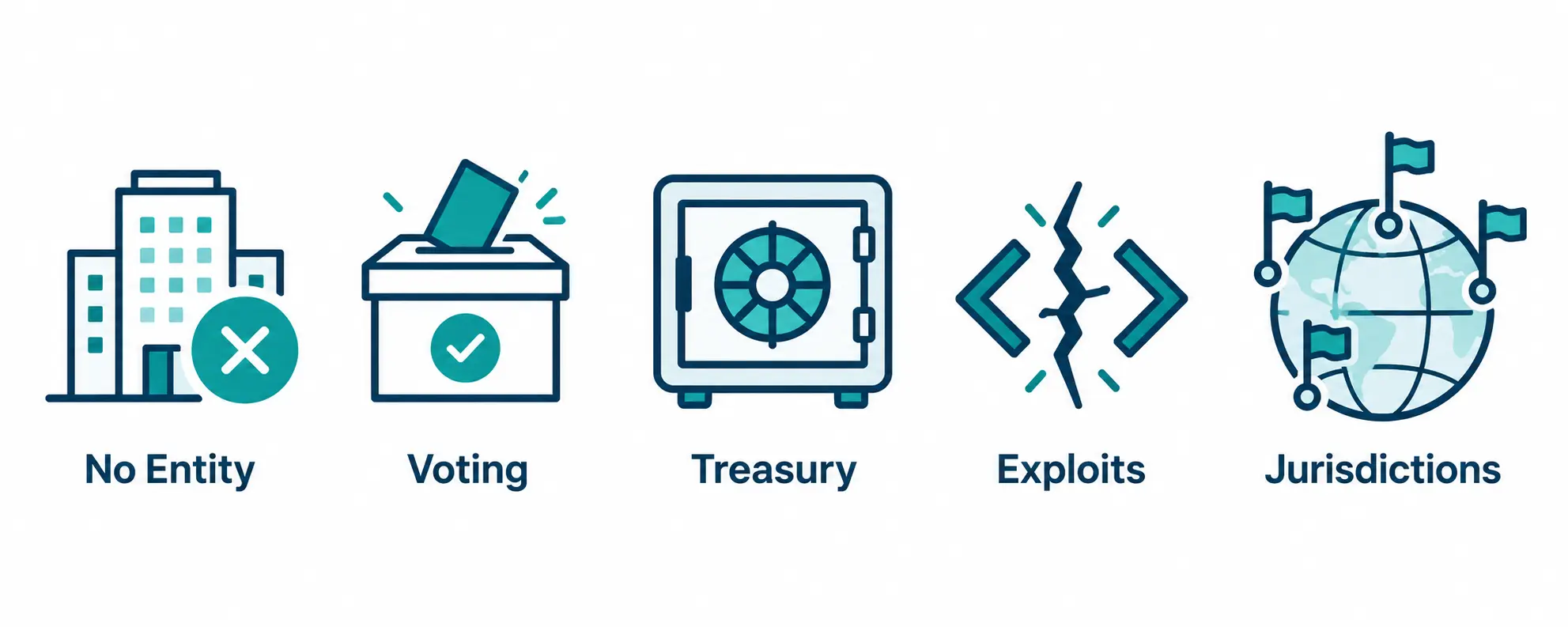
1. Operating a DAO Without a Legal Entity
In CFTC v. Ooki DAO (2022), a US federal court treated the DAO as an unincorporated association. Token holders who voted on governance proposals were treated as its members, and the process was allowed through the DAO's own online forum.
In Samuels v. Lido DAO (2024), a California federal court allowed claims to proceed on the theory that the DAO operated as a general partnership. Institutional investors that took part in governance were within the frame.
Neither ruling means every voter will be liable. Both show that courts look past the word "decentralized."
2. Voting on Governance Proposals
On-chain voting feels like a technical act. In an unincorporated structure, it can also be evidence of membership and control.
The risk grows with activity and voting power. A participant who drafts, proposes, and votes on key decisions looks more like an organizer than a passive holder.
3. Managing Treasury Funds and Token Launches
Treasuries and token sales create disputes about who owns what. Who holds the keys? Who approved the spending? What were buyers told?
Treasury signers can face claims if funds are misallocated. Founders who promote tokens can face securities and consumer claims, depending on the facts.
Our guide to token issuance and securities law explains how design choices shape that exposure.
4. Smart Contract Failures and Security Incidents
Exploits and coding errors can lead to user losses, and user losses lead to legal claims. Plaintiffs tend to name identifiable people or entities, such as founders, lead developers, or whoever deployed and controlled the contracts.
Outcomes depend on roles, representations made to users, and applicable law. Audits and open-source code help, but they do not guarantee protection.
5. Operating Across Multiple Jurisdictions
Incorporating offshore does not make a project immune from other countries' laws. Users, regulators, and courts where a project operates or markets can still assert claims.
A project with US users, EU marketing, and a Marshall Islands entity has to think about all three. Our DAO compliance requirements guide outlines the obligations that follow founders across borders.
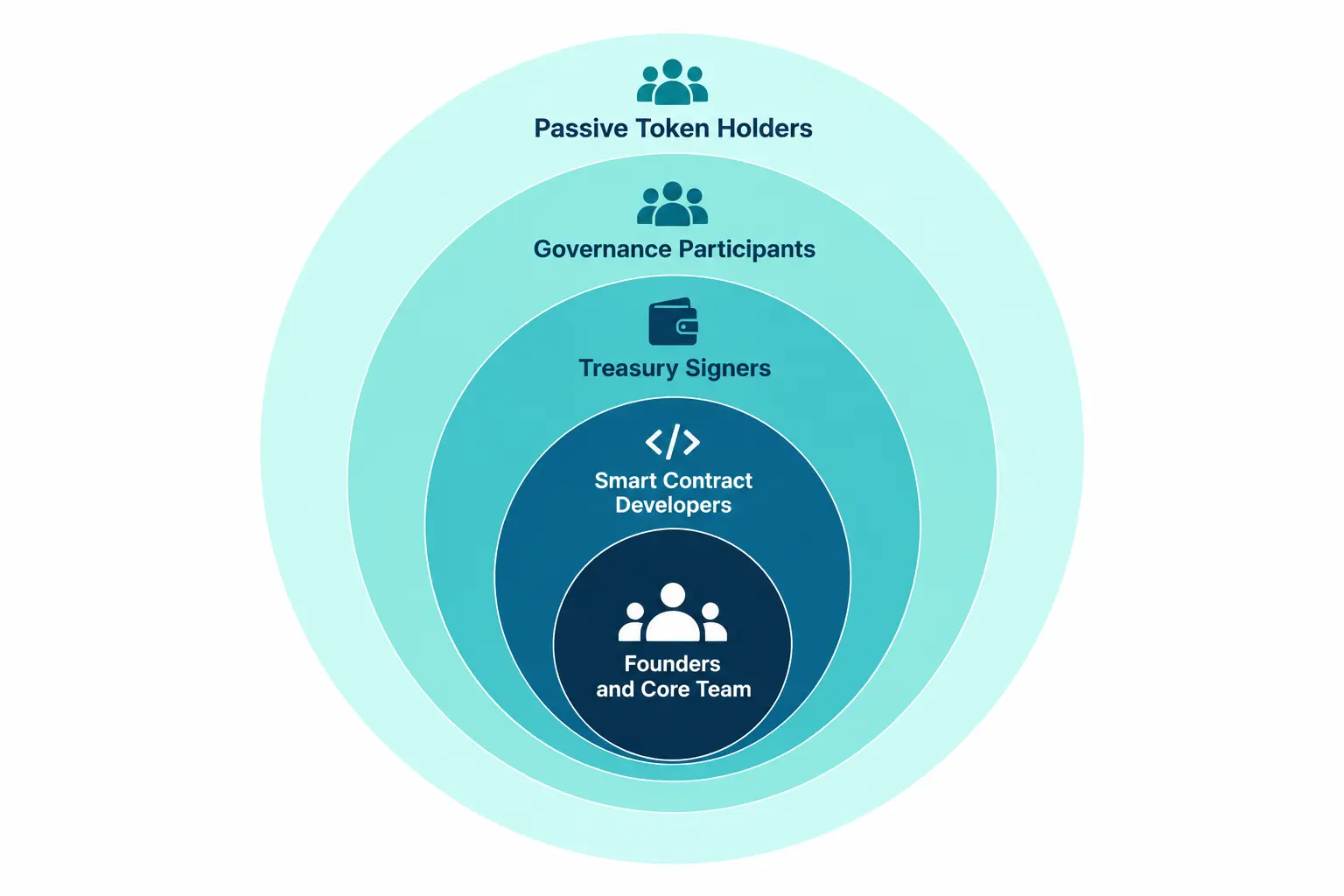
Who Can Be Held Personally Liable in a Crypto Project?
Liability depends on a person's role, their actions, and the project's legal structure. Participation alone does not automatically establish liability in every case.
Role Why Exposure May Arise What Shapes the Outcome
Founders and core team
Control, public statements, key decisions
Role, representations made, entity structure
Smart contract developers
Code defects, deployment choices
Degree of control, contractual role, applicable law
DAO governance participants
Voting and proposals in an unincorporated group
Level of participation, how a court classifies the DAO
Treasury signers
Control over funds and transfers
Authority, duties, documentation
Passive token holders
Generally lower, but not zero
Whether they act as members or only hold tokens
A passive holder who never votes faces far less exposure than a founder who markets the project and controls the treasury. Still, no role is automatically safe without a structure behind it.
How Does a Legal Entity Help Protect Crypto Founders?
A legal entity creates a separate legal person that can own assets, sign contracts, and carry the organization's obligations. That separation is the foundation of limited liability.
In practice, an entity gives a project:
- Limited liability: members' personal assets are generally shielded from the entity's debts
- Clear asset ownership: the treasury, intellectual property, and domains belong to the entity
- Formal contributor agreements: enforceable roles, IP assignment, and compensation terms
- A counterparty: banks, exchanges, auditors, and insurers need someone to contract with
- A clear line: entity obligations stay separate from personal obligations
If the concept is new to you, our guide to what a crypto legal wrapper is and why your project needs one explains the basics.
How Can the Marshall Islands DAO LLC Help Address Liability Risks?
The Marshall Islands DAO LLC gives Web3 organizations a legal home built for token-based membership and on-chain governance. It was designed for how these projects actually operate, not adapted from traditional company law.
Key features that address the risks above:
- Separate legal personality: the entity owns assets and signs contracts in its own name
- Limited liability: members are generally not personally liable for the entity's obligations
- Token-based membership: general members provide no personal information, and only beneficial owners with 25% or more of governance rights complete KYC
- On-chain and algorithmic governance: smart contracts can serve as the governance authority, with no required directors
- A legal home for assets: treasury, IP, and agreements sit with the entity
Over 250 entities have been registered through MIDAO's government-authorized program, including Pyth Network, MoonDAO, and ApeCoin Governance DAO.
Incorporation Is Not Absolute Immunity
Limited liability has limits. Founders and participants can remain liable for their own conduct, regardless of the entity.
That can include:
- Fraud, misrepresentation, or other wrongful acts
- Personal guarantees or obligations they sign for individually
- Regulatory duties under securities, tax, and AML rules where they apply
An entity is a foundation, not a substitute for good conduct and compliance.
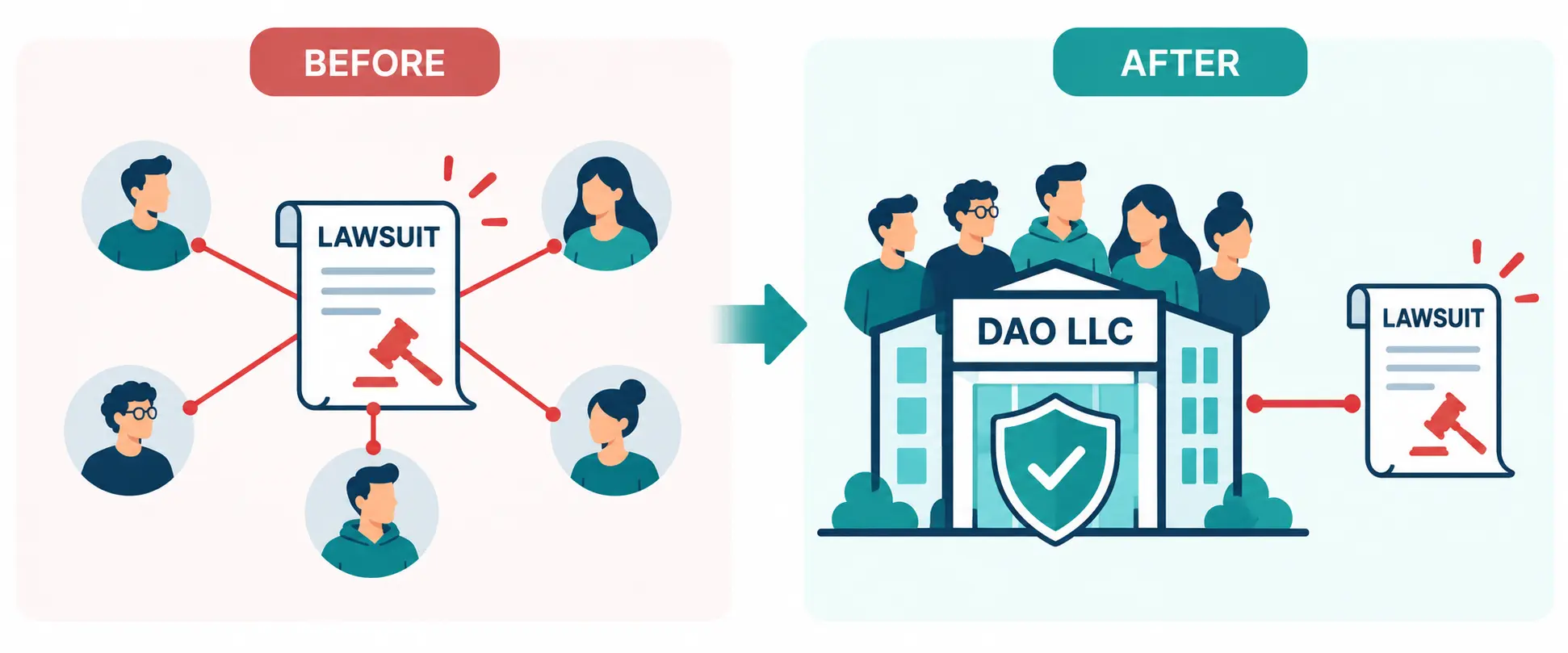
Decentralization Is a Design Choice, Not a Legal Shield
Decentralization changes how a project is governed. It does not remove the legal system's need for someone to be accountable.
Courts, regulators, and counterparties will look for a responsible party. If the project has not chosen one, the law may choose for it, and the people closest to the project are usually the first in line.
The best time to address liability is before a dispute arrives. Our step-by-step guide to incorporating a token project shows how to build that foundation before launch.
Ready to put a legal structure between your project and personal risk?
Start your Marshall Islands DAO LLC registration with MIDAO and get your entity in place in under 30 days.
Frequently Asked Questions
Can a crypto founder be sued after leaving a project?
Yes. Leaving does not erase liability for conduct during the founder's time with the project, and claims can generally be brought within the applicable limitation period. A formal entity and a documented handover of roles and keys help clarify where responsibility ends.
Does using a pseudonymous wallet protect a DAO contributor from legal claims?
No. Pseudonymity is not a legal defense, and on-chain activity can often be traced to individuals through exchanges and other records. In the Ooki DAO case, the court allowed service through the DAO's own online forum.
Can a crypto project's terms of service limit founder liability?
Terms of service can limit some contractual claims with users, but they cannot waive liability for fraud, legal violations, or claims from third parties who never agreed to them. They work best alongside an entity that is the contracting party. Enforceability varies by jurisdiction, so have counsel review them.
Does directors' and officers' insurance cover DAO founders and developers?
It depends on the policy and on having an insurable entity. An unincorporated DAO is hard to underwrite because there is no recognized organization to insure, while an incorporated entity can seek coverage on negotiated terms. Policies often exclude certain regulatory and crypto-specific risks, so read the exclusions closely.
Who is responsible for reimbursing users after a smart contract exploit?
There is no universal rule. Responsibility depends on the project's terms, what users were told, who controlled the protocol, and applicable law. Some DAOs vote to compensate users from the treasury, and an entity gives that decision a clear legal owner and process.