
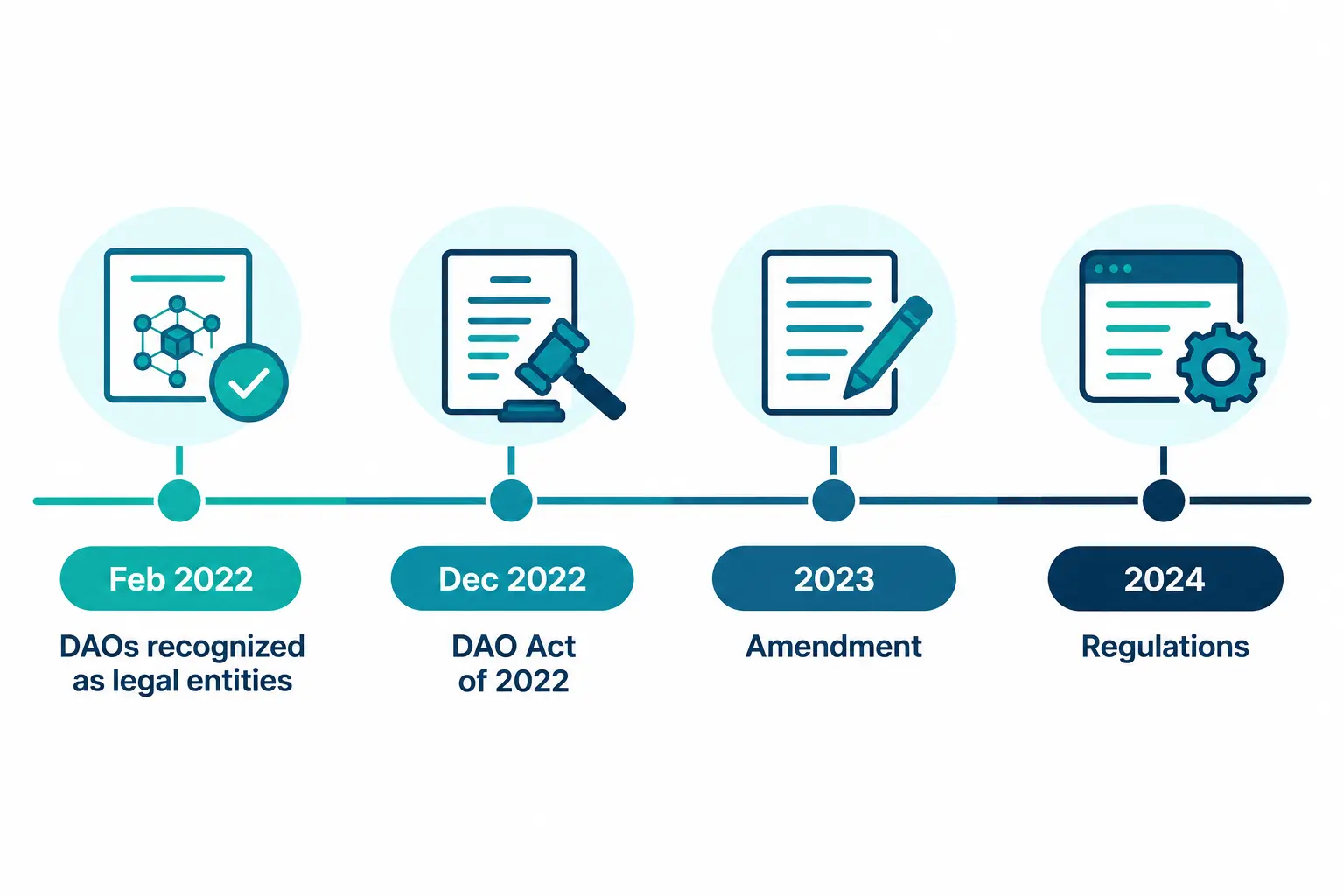
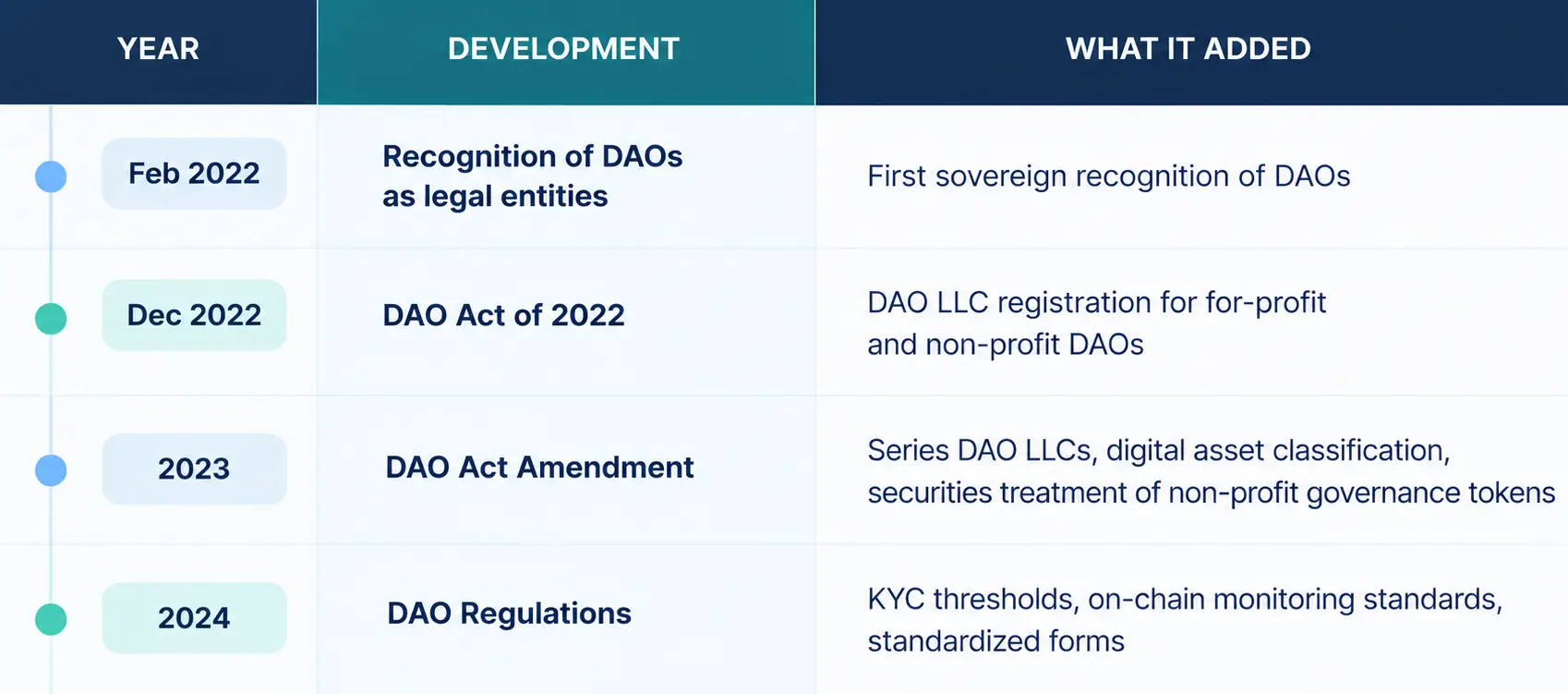
In its December 22, 2022 report, The Block noted that the Republic of the Marshall Islands had passed the Decentralized Autonomous Organizations Act of 2022, a law covering both for-profit and non-profit DAOs and creating a registry process for them.
For DAOs, that matters because most legal systems still have no category for them. Without one, members risk being treated as partners, treasuries struggle to find a banking home, and on-chain votes carry no formal legal weight.
The Marshall Islands took a different route. Its DAO law, often called RMI DAO law, gives decentralized organizations limited liability, legal personality, and a framework that recognizes blockchain-based governance. It has become the core of Marshall Islands crypto law for tokenized organizations.
This guide explains what the DAO Act does, how the 2023 Amendment and 2024 Regulations changed it, what compliance involves, and how tax treatment works.
What Is the Marshall Islands DAO Act?
The Marshall Islands DAO Act is legislation that lets a decentralized autonomous organization register as a limited liability company, called a DAO LLC, with legal recognition for its blockchain-based governance.
It was built around token-based membership and algorithmic management, rather than adapting a traditional company statute. The result is an entity whose legal form matches how a DAO actually operates.
The framework sits on an LLC law based on Delaware's LLC Act, so lawyers and counterparties find the underlying concepts familiar. Where RMI law does not address an issue, Delaware precedent can offer guidance.
MIDAO holds the exclusive public-private partnership with the RMI government as the sole registered agent for DAO LLCs. Over 250 entities have been registered.
What Are the Key Provisions of the Marshall Islands DAO Act?
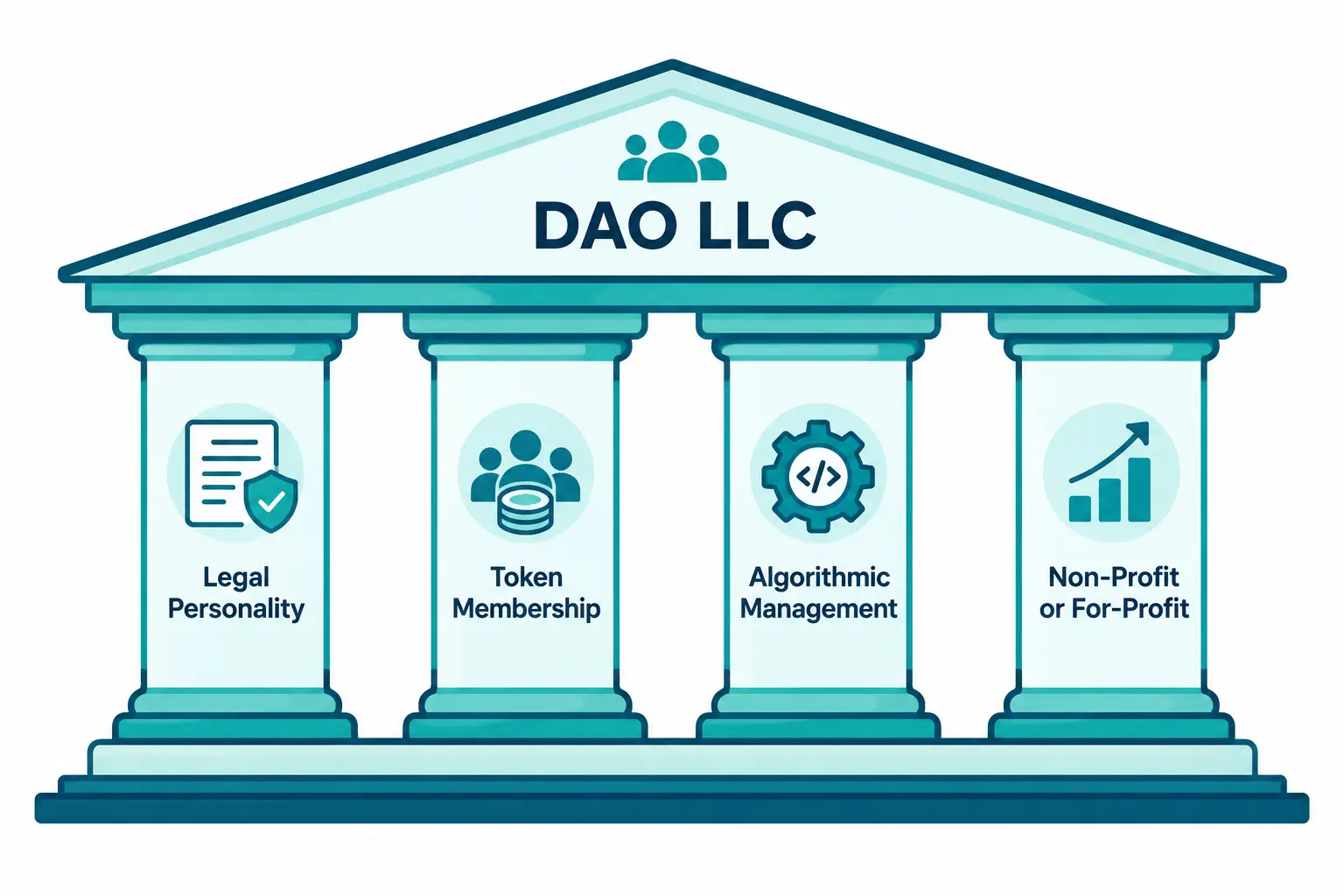
Four provisions define the DAO LLC: legal personality, token-based membership, manager-less operation, and the choice between non-profit and for-profit models.
Legal Personality and Limited Liability
A DAO LLC is a separate legal entity. It can hold assets, enter contracts, and appear in court in its own name.
Members are generally not personally liable for the entity's obligations. That separates organizational liabilities from personal assets, which is the protection unincorporated DAOs lack.
Our article on why unincorporated DAOs are legally exposed covers the cases behind that risk.
Token-Based Membership and Governance
Membership can be tracked through token holdings instead of a registry of names and addresses. Governance processes can run through blockchain systems.
General members do not submit personal information. Only holders of 25% or more of governance tokens trigger beneficial ownership reporting.
Manager-Less and Algorithmic Management
The framework does not require the management model used by conventional companies. Smart contracts can serve as the governance mechanism, with the operating agreement pointing to on-chain contracts as the source of authority.
No human manager is required, and records can be maintained on a blockchain.
Non-Profit and For-Profit DAO LLCs
The Act offers two models, and the choice shapes both taxation and token design.
- Non-profit: no profit distributions to members, treasury funds operations and development, and governance tokens represent participation rather than economic ownership
- For-profit: can generate and distribute profits, and tokens may carry economic rights
The choice between the two cannot be reversed after formation.
How Did the 2023 Amendment Change the DAO Legal Framework?
The 2023 Amendment's most important change is its treatment of governance tokens: tokens issued by a non-profit DAO LLC that carry no economic rights are not treated as securities under Marshall Islands law.
That link between non-profit status, no economic rights, and securities treatment is written into the statute rather than left to interpretation. The Amendment also added Series DAO LLC capability and digital asset classification.
Where the Securities Protection Stops
RMI securities law does not apply to transactions outside the Marshall Islands. The securities laws that matter are those of the places where tokens are actually sold.
The carve-out protects the entity under RMI law, but it does not override US, EU, or other securities rules for purchasers in those markets. Our guide to token issuance and securities law explains how token design interacts with those rules.
Separately, a DAO LLC that issues governance tokens and runs a treasury is not automatically a VASP. VASP status attaches to services such as exchange, custody, or transfer.
What Compliance Requirements Apply Under the Marshall Islands DAO Regulations?
The 2024 DAO Regulations keep compliance light but not absent. They clarified KYC thresholds and on-chain monitoring standards, and introduced standardized forms that help registrations be completed in under 30 days.
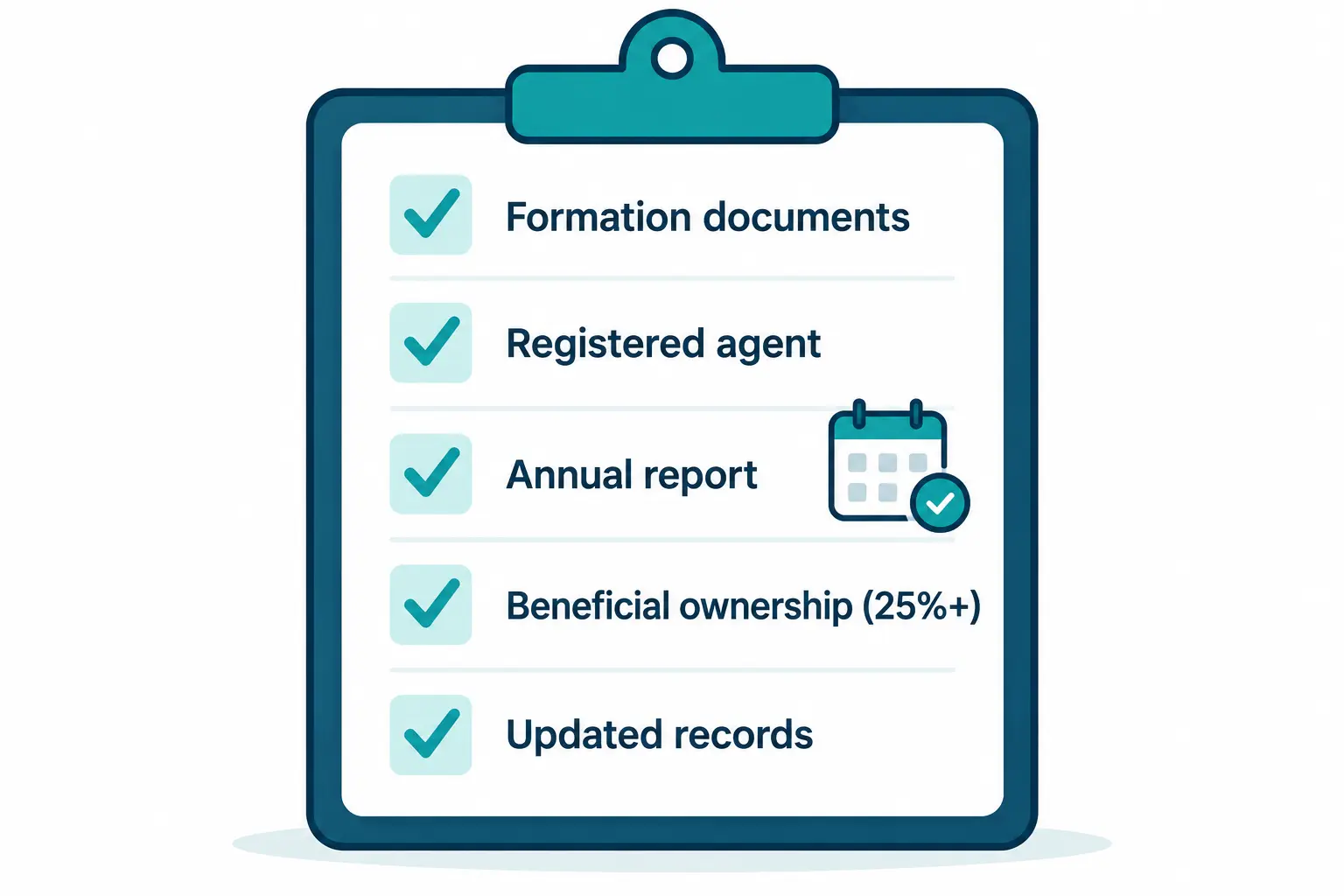
In practice, a DAO LLC needs:
- Formation documents: an operating agreement and charter documents describing governance, plus the for-profit or non-profit choice
- A registered agent: every DAO LLC needs one, and MIDAO is the only registered agent for this entity type
- Annual filings: a simplified annual report, with no audited financial statements required for non-profits
- Beneficial ownership reporting: identity information for anyone holding or controlling 25% or more of governance tokens
- Current records: governance documents and ownership information kept up to date
There is no member KYC. The DAO does not need to know who its general members are.
Keeping records current matters most when something changes. Update the operating agreement when contracts or voting rules change, and update beneficial ownership information when holdings cross the threshold.
Registration starts at $9,500, covering document preparation, filing fees, and the first year of registered agent service.
Our DAO compliance requirements guide covers the wider picture.
How Does the Marshall Islands DAO Act Treat Taxes?
Tax treatment depends on the model you choose: non-profit DAO LLCs have no entity-level tax, while for-profit DAO LLCs pay a 3% Gross Revenue Tax.
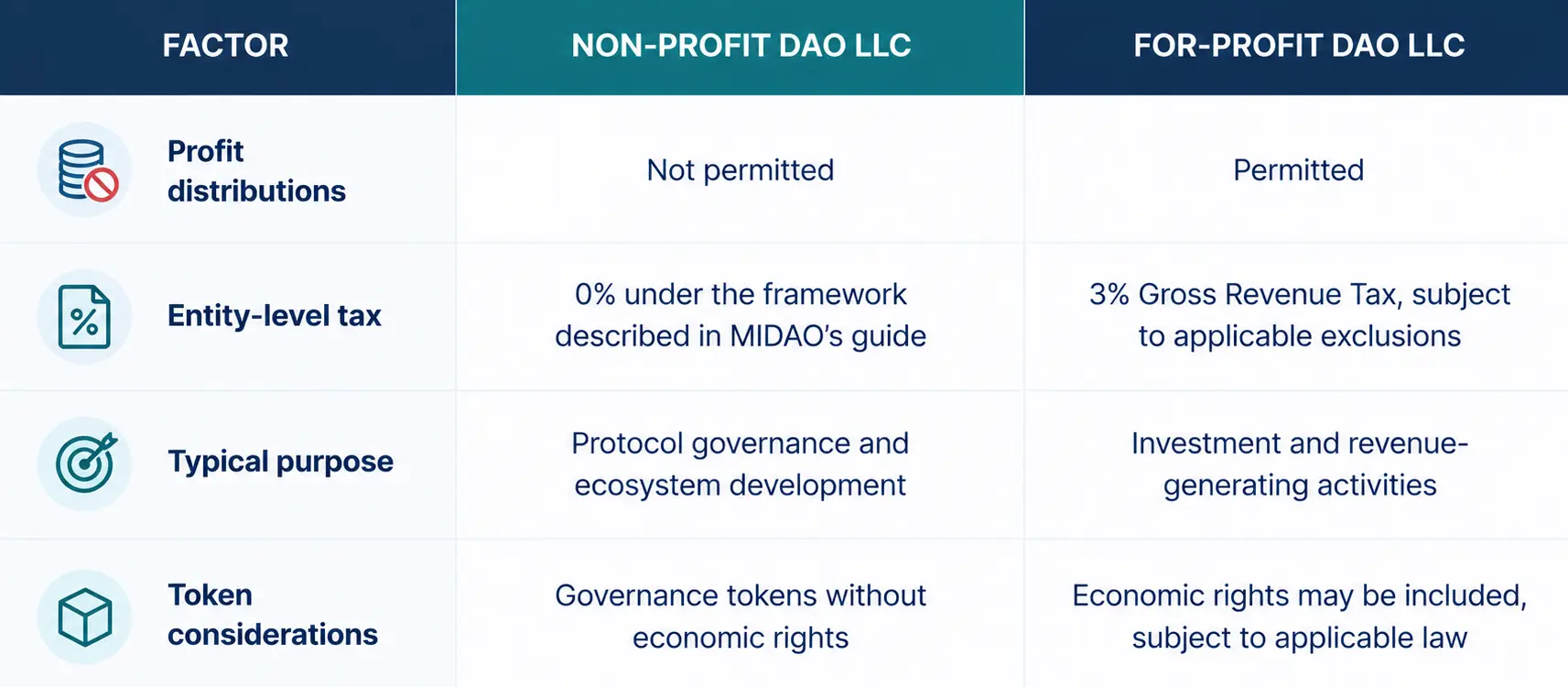
The 3% tax applies to revenue generated outside the Marshall Islands. Capital gains, dividends, and invested capital are excluded.
What the Entity's Tax Treatment Does Not Decide
Treatment under Marshall Islands law does not determine every tax obligation. Founders, members, and international operations may still face obligations in their own jurisdictions.
US persons in particular should note that US tax obligations do not disappear because the entity is offshore.
Our overview of DAO tax implications explains how those questions arise.
What Should Founders Assess Before Choosing a DAO LLC Structure?
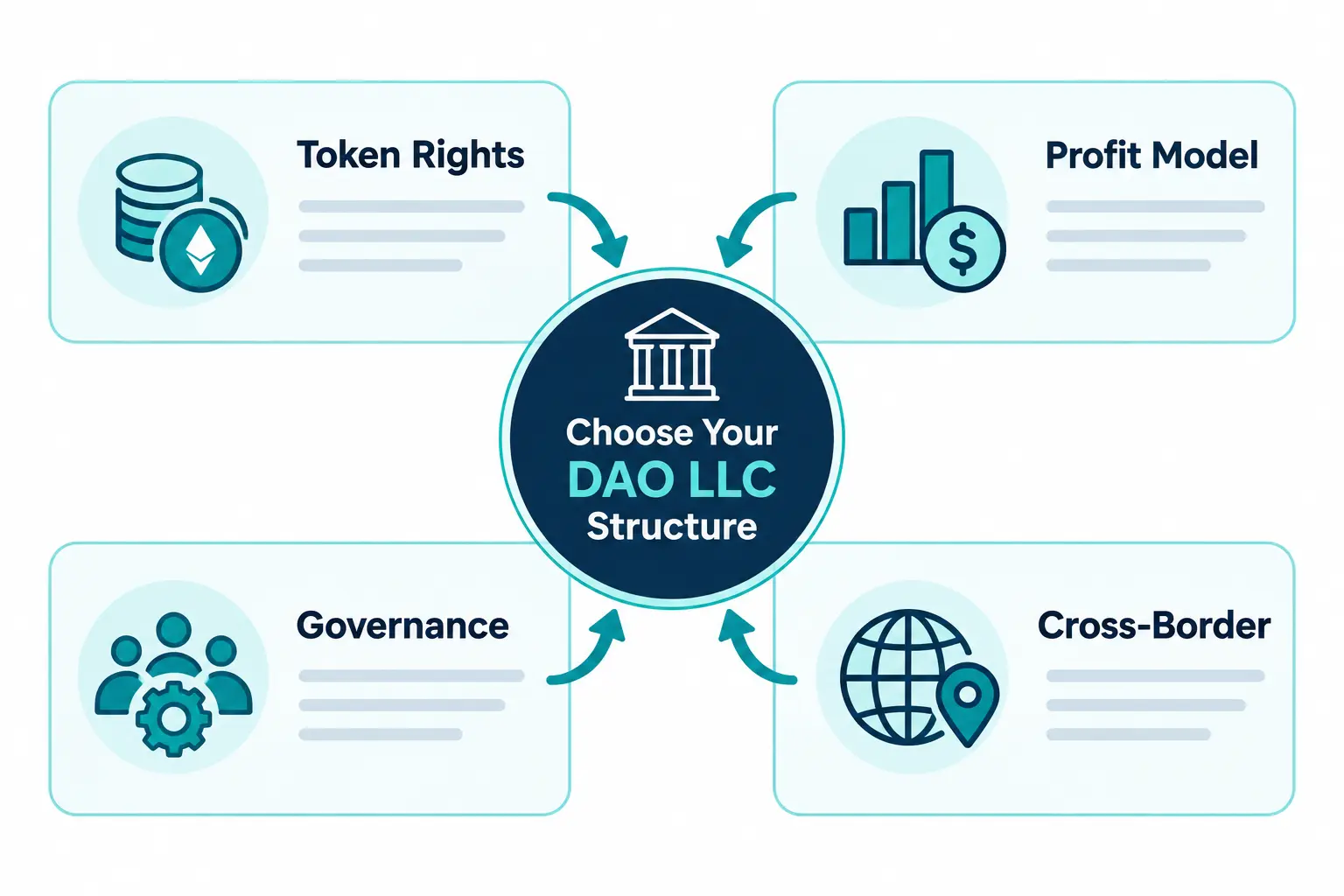
Founders should assess four things before choosing a structure: token rights, profit model, governance arrangements, and cross-border obligations.
- Token rights: does the token carry economic rights, or governance rights only?
- Profit model: will the organization distribute profits to members?
- Governance arrangements: token voting, multisig, algorithmic, or a mix?
- Cross-border obligations: where are your members, users, and token buyers?
Our step-by-step guide to incorporating a token project walks through that sequence.
Why the DAO Act Rewards Founders Who Decide Early
The DAO Act rewards founders who settle their structure before they launch a token, because that one choice shapes how the token is classified, how revenue is taxed, and how governance is recognized.
The legislation gives DAOs a framework for formation, token-based membership, and blockchain-native governance. The 2023 Amendment and 2024 Regulations added securities treatment and clearer compliance rules.
The decisions still sit with founders, and the non-profit or for-profit choice cannot be undone. Answering these questions early lets a project register with confidence instead of restructuring under pressure.
A registered agent can help you map those choices before you file.
Ready to register under the Marshall Islands DAO Act?
Start your DAO LLC registration with MIDAO and get your entity in place in under 30 days.
Frequently Asked Questions
Can an existing DAO register under the Marshall Islands DAO Act without launching a new token?
Yes. A deployed token is not required to incorporate, and an existing DAO can register by providing its governance contract addresses and aligning its documents with the on-chain setup. Make sure the existing token's rights match the structure you choose, since the securities carve-out covers only non-profit governance tokens with no economic rights.
What happens to a Marshall Islands DAO LLC if its registered agent relationship ends?
A DAO LLC needs a registered agent to stay in good standing, so the relationship has to be maintained or replaced. MIDAO is currently the only registered agent for this entity type, so confirm the continuity arrangements and the consequences of a lapse before incorporating. Your attorney can advise on the specific statutory effects.
Can a Marshall Islands DAO LLC own intellectual property developed by independent contributors?
Yes, but ownership depends on the paperwork. In many jurisdictions, contributors keep the rights to their work unless they assign them in writing. The DAO LLC should sign contributor agreements that assign or license the IP to the entity.
How are disputes between DAO members handled under the Marshall Islands legal framework?
Disputes are generally resolved according to the operating agreement and applicable law. The agreement should define voting rules, escalation steps, and a dispute resolution method such as arbitration or mediation. Because RMI law is based on Delaware's LLC Act, Delaware precedent can offer guidance where RMI law is silent.
Can a Marshall Islands DAO LLC open a bank account or obtain institutional custody for its assets?
As a legal entity, a DAO LLC can apply for accounts and custody services, though approval depends on each institution's due diligence. MoonDAO, for example, is opening bank accounts through its non-profit DAO LLC. Expect requests for entity documents and beneficial ownership information.