
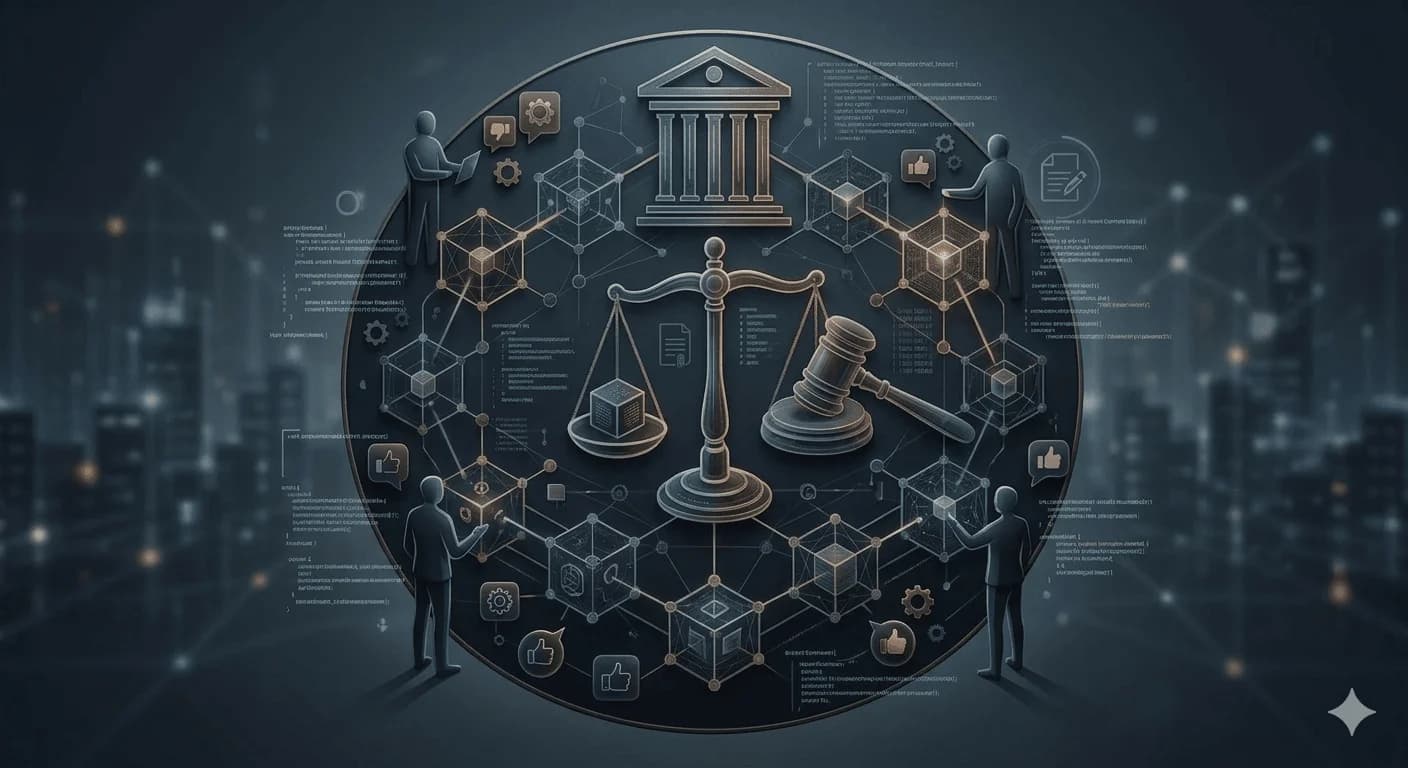
Key Components of the Marshall Islands' DAO Law
Marshall Islands' DAO law defines blockchain, smart contracts, and tokenized membership, shaping legal frameworks for Web3 projects.
The Marshall Islands introduced its DAO law in November 2022, establishing one of the first legal frameworks in the world built specifically for Decentralized Autonomous Organizations (DAOs) and Web3 projects.
Key takeaways
- The Marshall Islands introduced its DAO law in 2022, creating a legal framework built specifically for DAOs and Web3 projects.
- Smart contracts can legally serve as an organization's management structure under this law, removing the requirement for a traditional board or executive team.
- Governance tokens are recognized as membership interests, giving token holders a defined legal relationship with their organization.
- Keeping records on an open and public blockchain satisfies the law's record-keeping requirement without additional paper or PDF filings.
- The law combines blockchain-native definitions, algorithmic management, tokenized membership, and blockchain-based record-keeping into a single legal structure.
Traditional corporate law was not written with blockchain in mind. This legislation was. It gives DAOs a legal structure that reflects how they actually operate, rather than forcing them into frameworks designed for a different kind of organization.
By ensuring that these innovative entities can operate within a supportive legal structure, the Marshall Islands is not just accommodating the current needs of the digital world. It is actively fostering a space where Web3 projects can grow and innovate without being held back by outdated legal systems.
Through a closer look at the critical components of this law, we gain clear insights into how the Marshall Islands is building a legal structure that is genuinely crypto-native, deliberately designed to support the workings of blockchain technology and decentralized networks.
This advancement was highlighted in a recent episode of the Network State Podcast, hosted by Balaji Srinivasan, featuring Adam Miller, entrepreneur and founder of MIDAO.
How the Law Handles the Three Core Operational Realities of DAOs
At the heart of the Marshall Islands' DAO law is the precise definition of foundational terms: blockchain, digital assets, and DAOs. Adam Miller, an entrepreneur and founder of MIDAO, emphasized the importance of these definitions, stating, "Defining what a blockchain is. What is a digital asset? What is a DAO?"
This foundational clarity is crucial for legal recognition and provides a solid groundwork upon which Web3 entities can operate. These definitions ensure that the law accurately reflects the nature of the technology it seeks to govern, bridging the gap between traditional legal frameworks and the digital age.
Smart Contracts Can Legally Manage an Organization
One of the most significant provisions in the DAO law is its recognition of algorithmic management.
What does that mean in practice? It means a smart contract can serve as the management structure of an organization, with no requirement for a traditional board or executive team.
Miller described why this matters: "An algorithm can manage an organization instead of having a traditional management team." For DAOs that govern themselves through on-chain votes and automated execution, this provision removes a major legal obstacle. Previously, the absence of a human management layer left these organizations legally exposed.
Governance Tokens Are Recognized as Membership Interests
The law also addresses tokenized membership interests, giving legal standing to the governance tokens that DAOs use to represent voting rights or economic participation.
As Miller put it: "Things like a membership interest can now be represented by one person, one vote, or one token, one vote."
This matters for several reasons:
- It legitimizes the primary mechanism through which DAO members participate in governance
- It gives token holders a defined legal relationship with the organization
- It reduces the risk of governance tokens being treated purely as unregistered securities with no recognized organizational function. The SEC's framework for digital asset investment contracts gives useful context on how regulators currently think about this question
Public Blockchain Records Replace Paper Filing Requirements
Traditional LLC law typically requires organizations to maintain records and produce them on request, in paper or PDF format.
The Marshall Islands law takes a different approach. If a DAO keeps its records on an open and public blockchain, that satisfies the requirement. No additional filings needed.
Miller was direct about this: "As long as you're keeping all of your records on an open and public blockchain, you don't have to furnish your records in any other way."
This reflects a practical understanding of how DAOs already operate. The records exist. They are public, timestamped, and immutable. The law recognizes that.

What This Legal Framework Means for Web3 Projects Considering Incorporation
The Marshall Islands' DAO law does more than accommodate DAOs. It gives them a structure that matches their actual design.
By combining legal definitions built for blockchain, recognition of algorithmic management, legitimized tokenized membership, and blockchain-based record-keeping, the law answers the core question many Web3 founders face: where can we incorporate without compromising how we operate?
The options in most other jurisdictions come with significant tradeoffs:
- United States: Regulatory uncertainty at the federal level makes this a difficult choice for most Web3 projects, even with Wyoming's innovative DAO LLC structure
- Cayman, BVI, Switzerland: These jurisdictions require boards and officers, creating the kind of centralized structure that invites regulatory scrutiny and undermines decentralization
- Marshall Islands: The only offshore sovereign nation with a DAO LLC structure that requires none of the above
As Miller summarized, this law represents a "legal bridge between Web 2 and Web 3," a way for decentralized organizations to exist within the traditional legal system without abandoning what makes them different.
Learn More About the Marshall Islands DAO Law
To go deeper on the Marshall Islands' legislation and the broader DAO space, listen to the "Just DAO It" podcast, which features long-form interviews with DAO founders and thought leaders, hosted by Adam Miller:
Additionally, the MIDAO blog is a rich resource for informative pieces on the legal frameworks surrounding DAOs and blockchain organizations worldwide, from the forward-thinking Marshall Islands to other jurisdictions.