
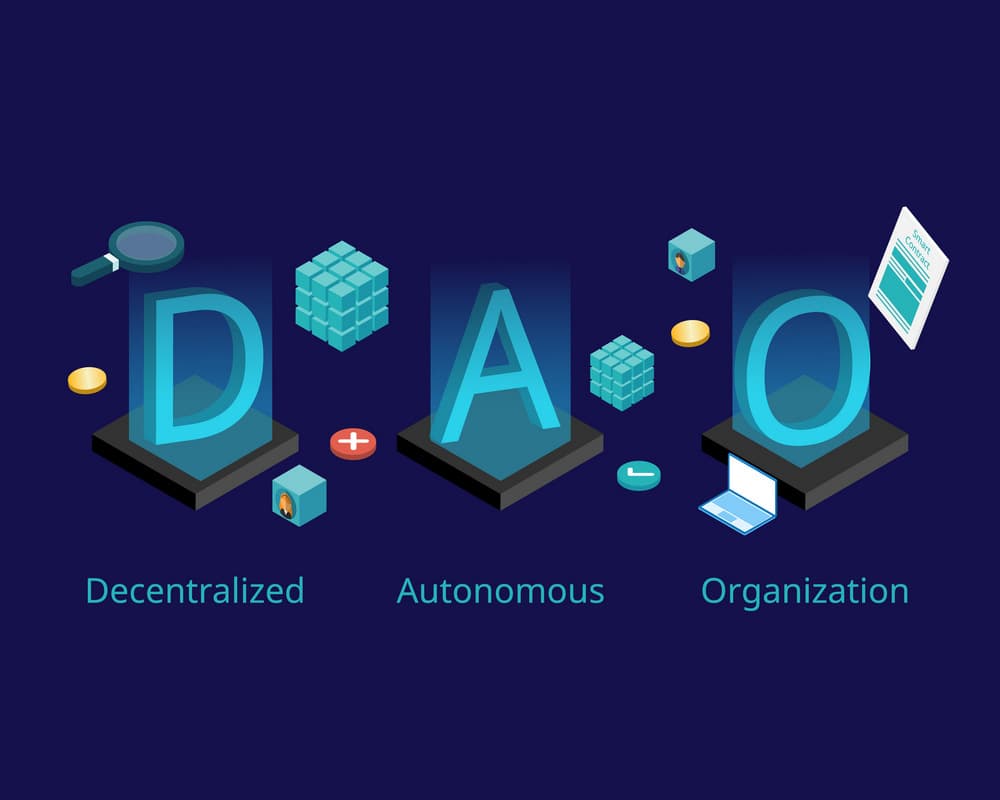
How DAO Governance Is Shaping DeFi's Financial Instruments
See how DAO-governed protocols like Open Dollar are building new DeFi financial instruments, and what it means for decentralized governance.
From DAO Origins to DeFi's Governance Layer
DAOs began as small onchain experiments in collective funding and governance, with Moloch DAO, The DAO, and MetaCartel among the earliest. For the full origin story, see The History and Evolution of DAOs. What matters here is what those early experiments became: a working model for how decentralized protocols govern financial decisions today.
Key takeaways
- DAOs began as small onchain experiments in collective funding and governance, with Moloch DAO, The DAO, and MetaCartel among the earliest.
- Raid Guild let freelance developers form a DAO collective, owning the organization together rather than working as hired contractors.
- Open Dollar operates as an "ungoverned DAO" where ODG token holders vote on which collateral types to add and on the protocol's debt limit.
- Open Dollar builds in a long time-lock so token holders can exit their positions before a bad proposal takes effect.
- Open Dollar's non-fungible vaults let users buy, sell, and transfer loan positions, a feature previously unavailable in DeFi lending.
Collective Ownership and the Future of Work
As DAOs gained traction and more projects emerged, the need for robust governance mechanisms became increasingly apparent. Joseph Schiarizzi's experience with Raid Guild, a product development DAO, highlighted the power of collective ownership and decision-making:
"And then, in 2020, you know, crypto was finally useful for the first time with DeFi and NFTs and all this other stuff. And there were a lot of projects building, so I joined Raid Guild, which was and still is a product development shop that is kind of a collective of freelancers.
I've been doing freelance software development for a long time; I've been a freelancer for years. But the amount of power that you get from teaming up with a couple of people in the DAO and saying, 'Hey, I need a designer for this project, and I need one other frontend,' and then coming together and being able to work as a collective and own, actually own instead of being hired as a contractor somewhere but owning the organization in the way that it was structured, was incredibly powerful. And I'm totally sold on it. I think it's one of the best possible models for hiring people and working. And I really think DAOs could be the future of work, too. Everything has basically come from that, and then I've had experiences since then. But that's basically my origin story."
Schiarizzi's experience underscores the transformative potential of DAOs in redefining traditional work paradigms. DAOs empower individuals to collectively own and govern their organizations rather than being mere contractors or employees.
The Shift Towards Minimized Governance
However, as the DAO landscape evolved, a growing recognition emerged regarding the need for minimized governance and increased autonomy. This shift was driven by a desire to create capture-resistant organizations that could withstand external influences and maintain their core principles over time. Schiarizzi's involvement with Open Dollar, a pioneering DeFi project, exemplifies this ethos:
"Yeah, it's actually governed by a DAO. Okay, so it's governed; there's a DAO that governs it, but it's an 'ungoverned DAO.' And so we're trying to take this principle of minimized governance. I wrote about this on Open Dollar recently. I'd love to share that article with you. But there is a DAO. The ODG token holders, Open Dollar Governance token holders, get to vote on what types of collateral to add to the DAO and to raise or lower the debt limit for the protocol. And there are a lot of safeguards, like a long time-lock, so after a proposal goes through, if it's awful, people have a chance to sell all their tokens or exit their positions before it executes autonomously. And also, the ODG token has barely any control over the rest of the protocol.
Many DeFi protocols have created DAOs and given their governance tokens absolute authority to add extra fees, change how it works, upgrade the contracts, and change the logic of things. Open Dollar is likely not upgradeable. You could deploy a new version of it and then connect that to the DAO if you wanted, but we're trying to build the most autonomous code possible, the most immutable code possible, and take away all of these parameters that the DAO could update and just say, no, we're going to set them once at launch, and then we're going for it, right? And try to have as little governance as possible. And build it for longevity."
Open Dollar's Innovative Financial Instruments
Open Dollar's approach to governance encapsulates the essence of minimized governance, where the DAO's control is limited to specific parameters like collateral types and debt limits. This restriction aims to create a resilient system that is largely autonomous and immutable, reducing the potential for external capture or manipulation.
Moreover, Open Dollar's innovative financial instruments are reshaping the DeFi landscape, offering users unprecedented flexibility and safety in managing their loans and collateral. By introducing non-fungible vaults, Open Dollar allows users to buy, sell, and transfer their loan positions seamlessly, a feature previously unavailable in traditional DeFi lending protocols.
As Schiarizzi explains:
"We have changed how vaults work in collateralized debt positions used to mint most decentralized stablecoins. Instead of paying back your debt to access your capital and collateral, you can sell your entire loan in the secondary loan marketplace. In the US alone, this is trillions of dollars in volume a year, but it's zero in DeFi. And that matters because there's this feature set of traditional finance that is not available in DeFi right now. And we need to make it more useful to have adoption and to allow DAOs to do all the things that traditional companies can do and to compete with them on-chain."
By bridging the gap between traditional finance and DeFi, Open Dollar is paving the way for DAOs to access previously unavailable financial instruments, empowering them to compete with conventional companies on a level playing field.
Conclusion: Reshaping the Future of Finance
The evolution of DAOs has been a remarkable journey, marked by experimentation, innovation, and a relentless pursuit of decentralized governance and financial empowerment. From the early days of The DAO and Moloch DAO to leading platforms like Open Dollar, the DAO ecosystem has consistently pushed boundaries, embracing minimized governance principles and pioneering financial instruments that are reshaping the DeFi landscape.
As more projects like Open Dollar emerge, offering innovative solutions that blend the best of traditional finance with the power of decentralization, DAOs are poised to play an increasingly significant role in the future of finance. By fostering capture-resistant organizations and enabling unprecedented flexibility in asset management, DAOs are redefining the boundaries of what's possible and paving the way for a more equitable and transparent financial ecosystem.